












-2__small.jpg)

























-3__small.jpg)


__small.jpg)


__small.jpg)


_with_flag,_jason__emily_rowley-4__small.jpg)


-2__small.jpg)



“Ope, let me just sneak right past ya.”
It’s part apology, part announcement, and about as Midwestern as casseroles, euchre, and neighbors who show up with a chainsaw when there’s firewood to cut.

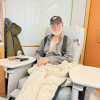
For Ohio native John Halter, though, finding a way to “get by” has taken a little more ingenuity.
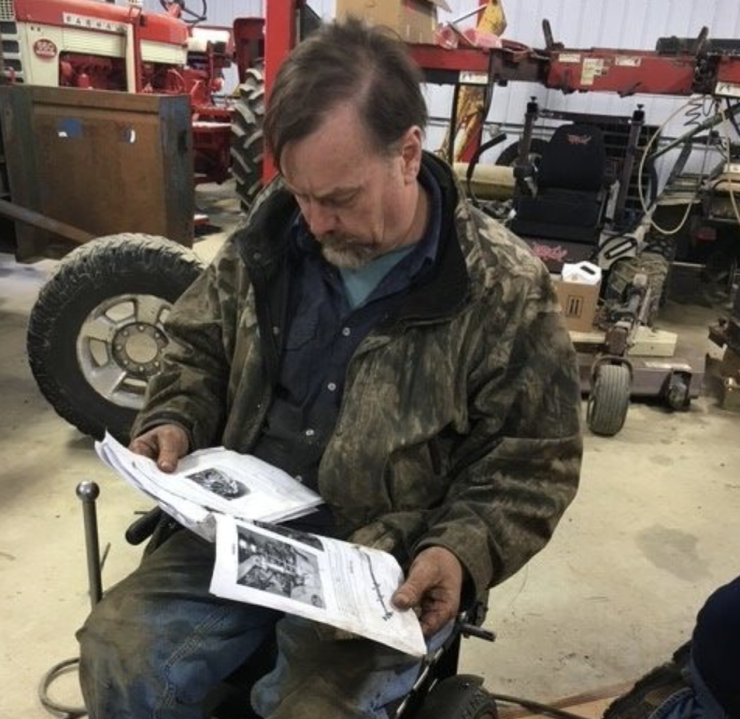
Long before John needed to figure out how to make a wheelchair work on a farm, he was the kind of kid who knew his way around a machine. His first job was milking 75 cows. His second was fixing lawnmowers.
From there came five years at Ford Motor Company, followed by college, construction work, a farm, tractors, machinery and a lifetime of figuring out how things work — and, more importantly, how to fix them when they don’t.
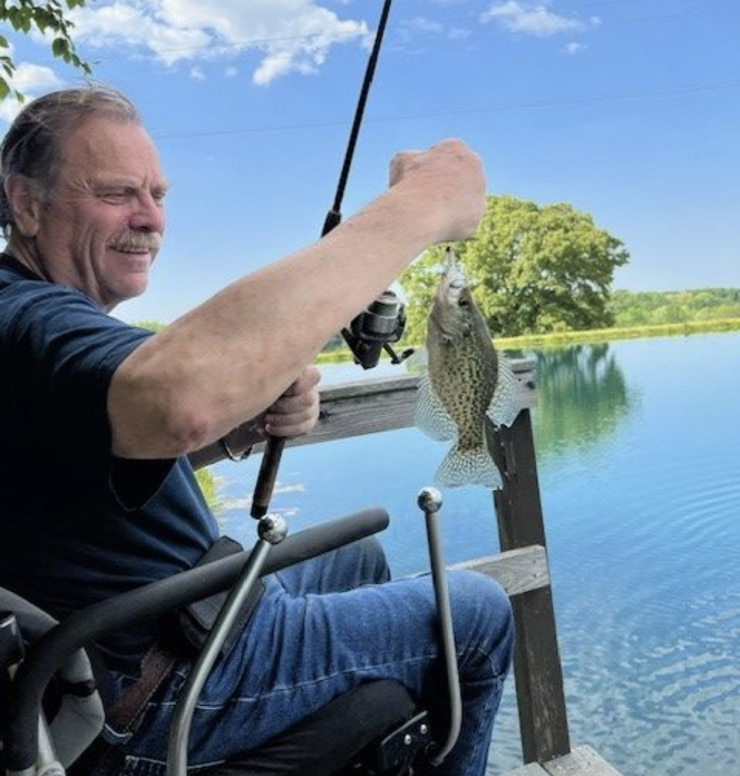
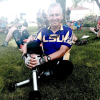
College was also where he met Margaret, a national-level cross-country runner who somehow took notice of the self-described “slowest guy on the track team.” They married in 1983, raised two children and eventually built a life on an Ohio farm with plenty of land to tend and things to fix.
“I was an old farm boy,” John laughed.
But early in their marriage, John encountered something he couldn’t simply fix.
John’s younger brother had died at 13 from a rare disease, and when John began experiencing neurological symptoms of his own, doctors initially suspected multiple sclerosis. Margaret, who was completing nursing clinicals at the time, kept asking questions and pushed for additional testing.
In 1989, at just 31 years old, John finally had an answer: Adrenomyeloneuropathy (AMN), the adult form of a rare genetic disease called Adrenoleukodystrophy (ALD). Over time, it would weaken his legs and eventually take away his ability to walk.
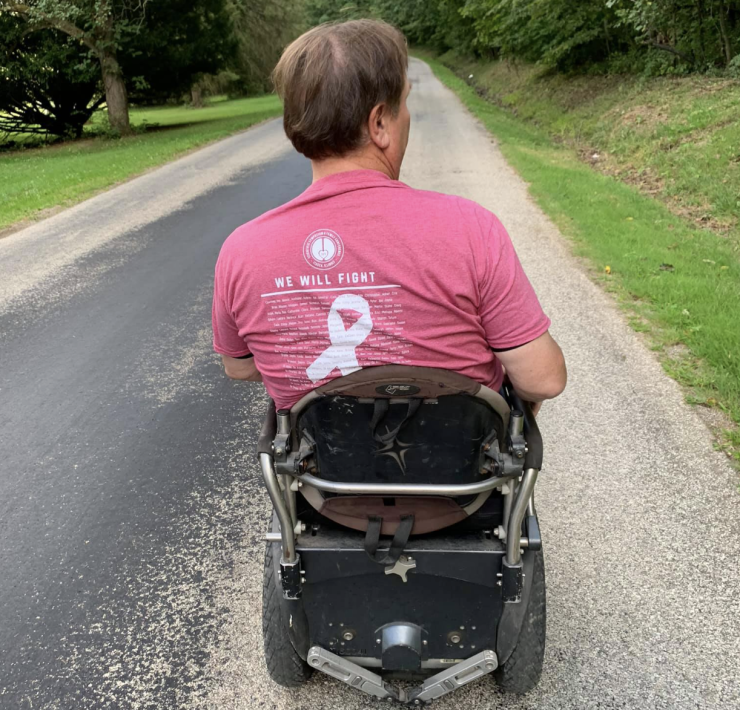
With two young children at home, John and Margaret were essentially told to get their affairs in order.
Instead, more than three decades later, John has done quite a bit of living.
He earned his pilot’s license, flew a fixer-upper airplane around the country, made 12 parachute jumps, taught mechanics, coached young athletes, raised his family, and became a grandfather.
“We’ve lived a really good life,” Margaret said. “We haven’t let his disease affect what our life is about with our kids, our grandkids, our family and our friends.”
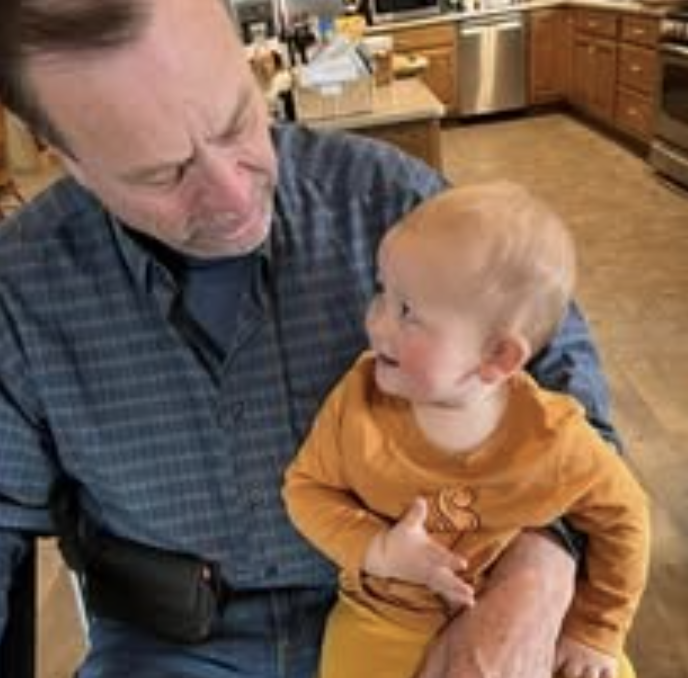
As his disease progressed, John went from one cane to two, then to scooters and eventually a wheelchair. But each time his body changed, he found another way to adapt. He added hand controls to his truck, engineered lifts to get himself onto tractors and modified equipment around the farm.
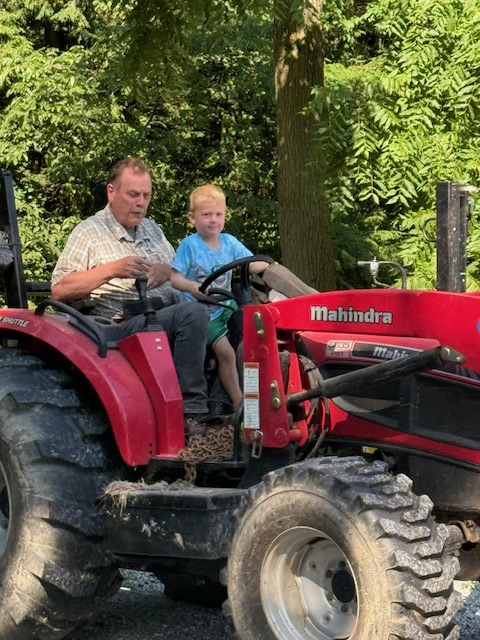
For John, all that tinkering protects something much bigger.
“Independence,” he said. “That’s probably the biggest part of a disability — losing your independence.”
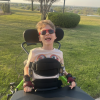
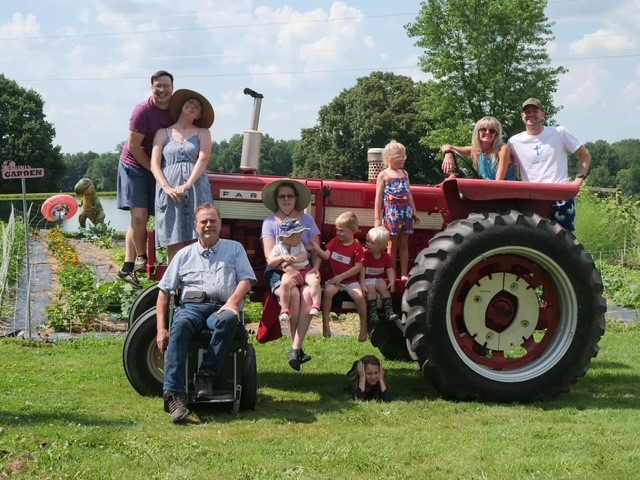
His Ally chair gave some of that back. Unlike many traditional power chairs, it can handle the grass, gravel, and uneven terrain of John’s actual life, allowing him to cross the farm, get to his shop, visit friends, and even chase sheep. He’s logged thousands of miles in one, including roughly 10,000 miles on a single chair.
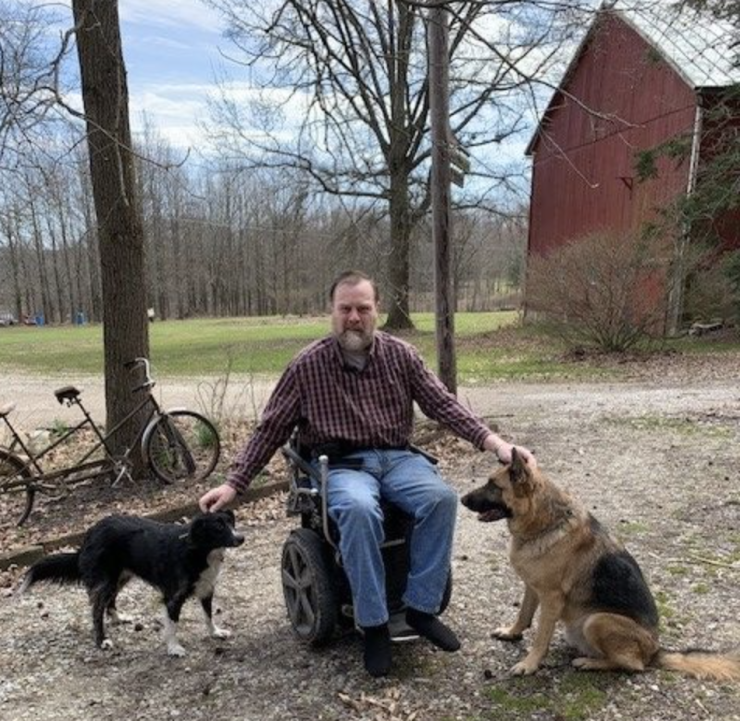
And John has certainly put the chair through its paces.
Years ago, his chair malfunctioned near the pond, sending John into 32-degree water. Despite having no use of his legs, John managed to get himself — and the chair — back out.
“I always say my guardian angel was a good swimmer,” he said.
Today, John’s aging Ally chair is beginning to fail, and even a lifelong fixer can only rebuild something so many times. At the same time, falls have become increasingly dangerous. Margaret can no longer safely lift John from the floor on her own, putting both of them at risk and sometimes requiring help from others.
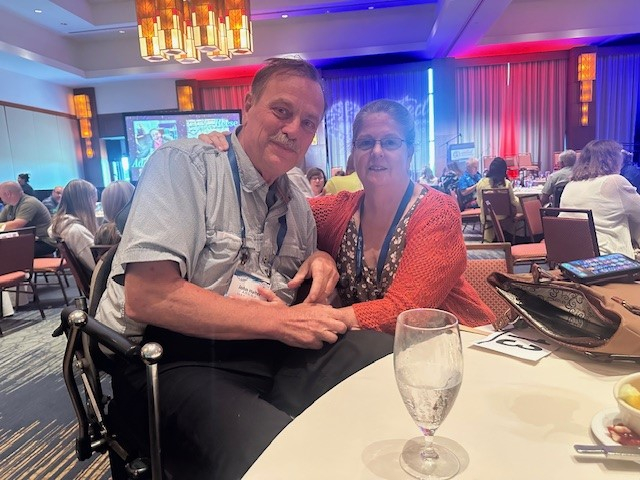
But after a lifetime of finding and funding their own solutions, asking for help didn’t come naturally.
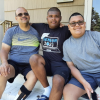
John understands that feeling better now. Years ago, he helped cut firewood for a man who had lost both hands and couldn’t understand why accepting help was so difficult for him. Today, around 30 friends and neighbors gather to cut John and Margaret’s firewood while Margaret feeds the crew.
“It’s humbling,” John said. “You still want to be able to go out there and run that chainsaw.”
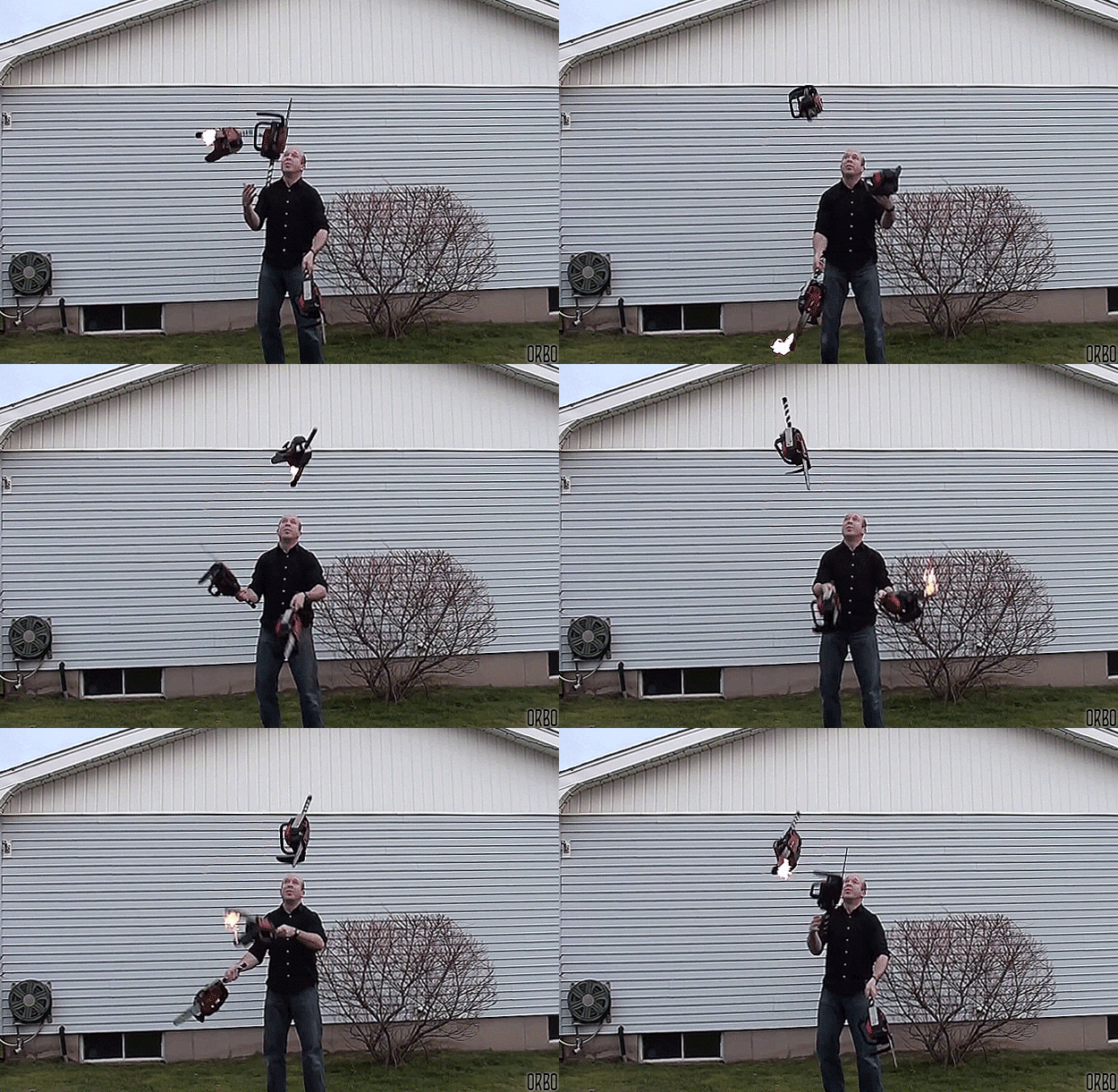
Fortunately, if there’s one thing Midwesterners know how to do, it’s show up for their neighbors.
And apparently, Chive Charities has a bit of a Midwest thing going, too. Our founders, John and Leo, and Executive Director Brian all hail from Fort Wayne, Indiana, just one state over. So perhaps it’s fitting that, among our recent grant recipients, Ohio leads the way with five — more than any other state represented. I’ve never been prouder of my home state!
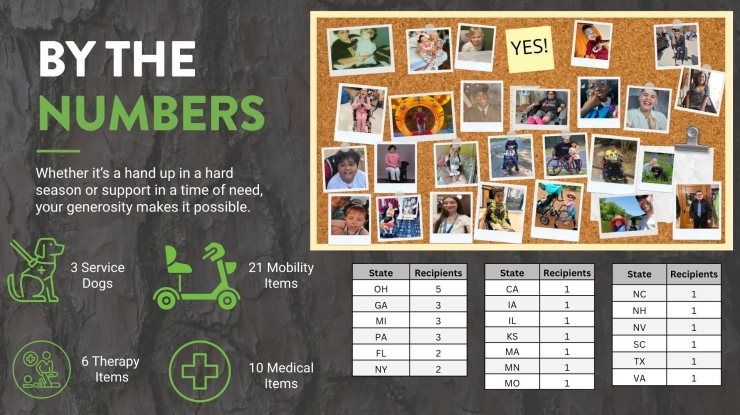
Thanks to your support, we’re thrilled to provide John with a $22,000 grant for a new Ally chair and an IndeeLift system, giving Margaret a safer way to help him after a fall and giving John the mobility to keep doing the things that make his life his own.
Or, as Margaret put it, “The right chair makes shenanigans possible.”
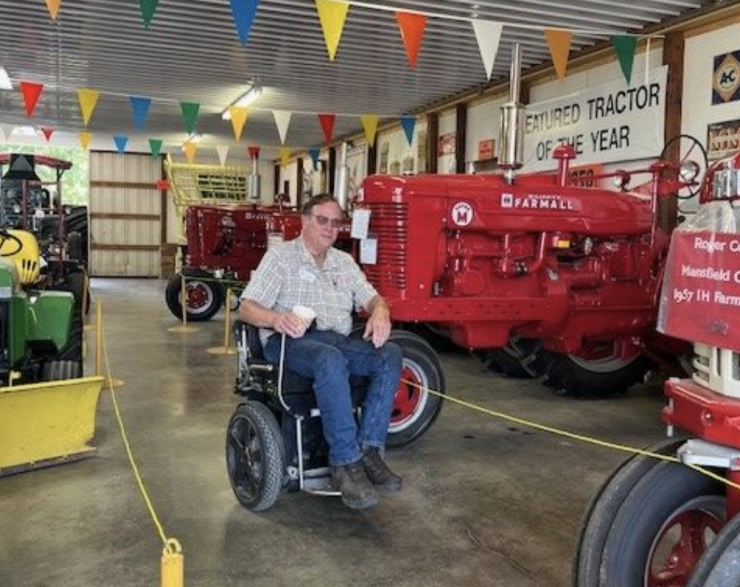
And there are plenty of shenanigans left: tractors to drive, grandchildren to take around the farm, sheep to chase and projects waiting in the shop.
If there’s one thing John knows, it’s how to keep something running. Sometimes that takes a little ingenuity. Sometimes it takes the right equipment. And sometimes, it takes a few good people willing to show up.
Your donation to Chive Charities can help put the right tools in the hands of people like John who have spent their lives finding a way forward.
Help us build what comes next: a new chair beneath John, a safer way for Margaret to help him up, and plenty more miles — and shenanigans — ahead. Because every once in a while, even the guy who always finds a way to get by could use a little help getting there. DONATE HERE.