



























-3__small.jpg)


__small.jpg)


__small.jpg)


_with_flag,_jason__emily_rowley-4__small.jpg)


-2__small.jpg)


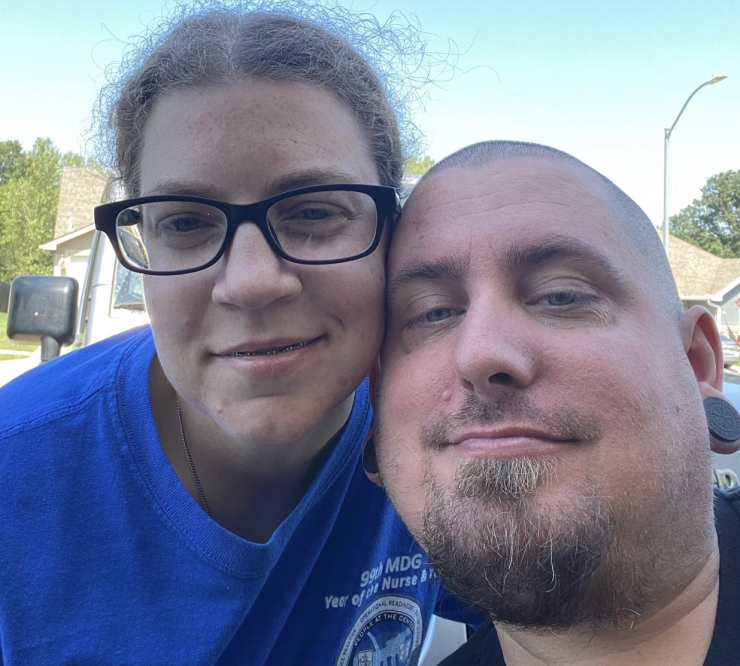
His life has always been built around doing — it didn’t really matter what it was. He was constantly working, fixing, moving, and figuring things out as he went. And when he wasn’t working, he was outside.

Before everything changed, he built a career in law enforcement. Outside of work, he went where things felt simpler — fishing, hunting, camping — not as an escape, exactly, but as a return. A way to be in a place where the expectations were clear and the pace made sense.
By the time he was twelve, he was already used to taking care of himself. That kind of self-reliance doesn’t fade. It settles in and stays with you.

So when his body started changing, it didn’t announce itself all at once. It showed up gradually. Stairs that didn’t feel quite right. Distance that felt longer than it used to. Small adjustments at first, and the kind you can work around.
Until he couldn’t.
Until they began to disrupt everything he knew.
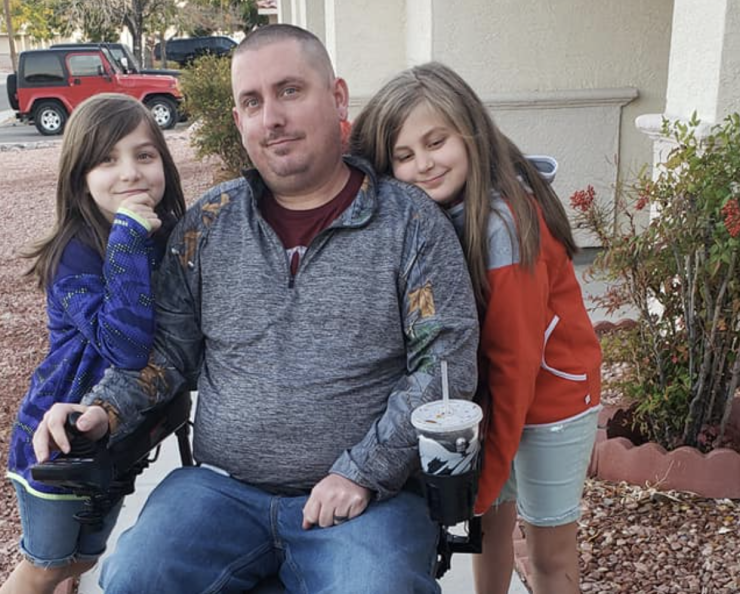
What followed was a long stretch of uncertainty. There were so many appointments, tests, and shifting answers that never quite held. At one point, he was diagnosed with CIDP, a nerve disorder that can cause weakness and mobility issues. Jonathan went through treatments that didn’t help and, in some cases, made things worse. It took years of continued testing — genetic work, imaging, and specialists willing to look closer — before things began to come into focus.
The answer, when it came, was a rare form of muscular dystrophy.
Even now, the details are still evolving. The exact type hasn’t been fully pinned down. What has become clear is how it’s changed his day-to-day life.

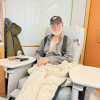
Jonathan uses a wheelchair full-time. Muscle loss has affected his legs, his arms, and his core strength. The mechanics of everyday life — moving through a room, doing laundry, reaching for something in the kitchen — require more planning, more effort, and often, more help.
That shift shows up in everyday ways.
There are parts of his home he can’t access without assistance. The laundry room has steps, so his wife handles it. The kitchen is tight, and reaching or leaning comes with risk because of his core strength. Even moving through certain stores can be difficult, depending on how things are laid out.
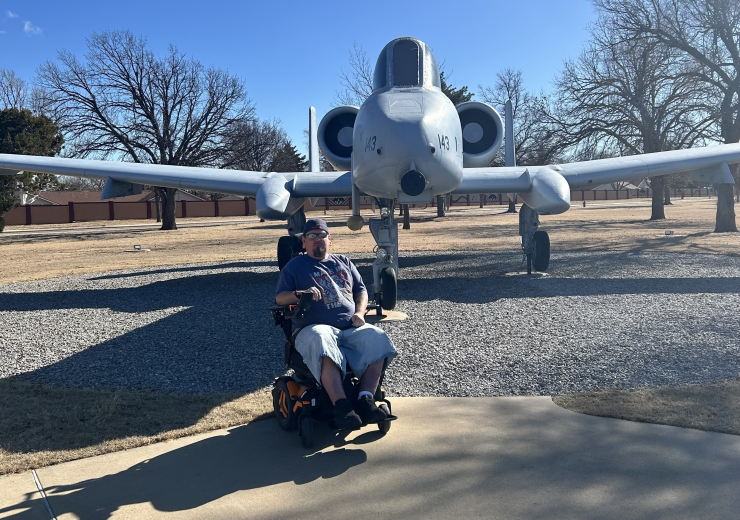
Outside, it gets harder.
Sidewalks aren’t always there. In some places, they just stop, which means being on the road or not going at all. Grass, gravel, uneven ground — all of it limits where he can go and how far he can get.
He used to spend his time outside without thinking about it. Now, even something as simple as getting into his own backyard can be a challenge depending on the ground.
That’s been one of the harder adjustments.
“I’ve been active my whole life,” he said. “And then it just… took it away.”
Still, he hasn’t stopped building a life forward.
He went back to school and earned his bachelor’s degree, then his master’s, and continued into a doctoral program. He did it while managing weekly treatments, doctor appointments, and everything that comes with a diagnosis that continues to evolve.
At home, life stays full. His wife serves on active duty, which means moving every few years and starting over each time. Their daughters are growing into their own paths, with one already taking college courses and the other chasing her goal of becoming a pilot.

Jonathan stays involved in all of it.
He’s also found new ways to work with his hands. What started as curiosity turned into 3D printing, designing small fixes around the house, solving problems as they come up, that kind of thing. It’s different from the kind of work he used to do, but it still gives him something to build.
What hasn’t had a clear workaround is the outdoors. And that’s where the Action Trackchair changes things.
With support from Chive Charities donors, Jonathan received an all-terrain chair built to handle grass, dirt, and uneven ground for a total impact of $21,684.
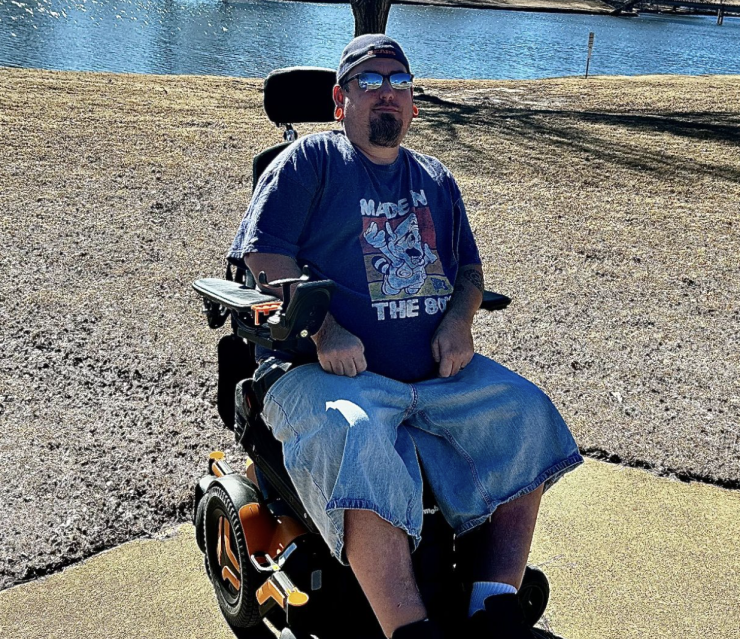
It means he can get into his backyard again. It means showing up to events without having to think about where the pavement ends. It means returning to the kind of spaces he’s always felt most at home in.
“I can finally get back out there,” he said.

Jonathan has kept moving forward through all of this — through the uncertainty, the setbacks, and everything that’s come with it.
Now, there’s more in front of him again.
If you believe in restoring that kind of access for more first responders like Jonathan (or Veterans, military families, or those with a rare medical diagnosis), you can be part of it with Chive Charities. We always have room in the family for more life-changers. Become part of our community of supporters and DONATE HERE.
The Breakdown
How do nonprofits help injured firefighters?
Nonprofits like Chive Charities provide direct support by funding life-changing resources such as mobility equipment, home modifications, and medical assistance to restore independence and quality of life.
How can adaptive equipment help people with muscular dystrophy regain independence?
Answer: Adaptive equipment like all-terrain wheelchairs allows individuals with muscular dystrophy to navigate uneven surfaces such as grass, gravel, and dirt. This restores access to outdoor environments, increases independence, and improves quality of life by enabling participation in activities that were previously inaccessible.