



























-3__small.jpg)


__small.jpg)


__small.jpg)


_with_flag,_jason__emily_rowley-4__small.jpg)


-2__small.jpg)



Growing up on Long Island, she filled her days with gymnastics, skiing, snowboarding, and just about any sport she could try. It was the kind of childhood where scraped knees and sore muscles were part of the deal. You played hard, you got a little banged up, and then you went out and did it all again the next day.

Looking back now, there were small signs that something wasn’t quite right. But nothing seemed serious enough to raise alarms.
“I grew up relatively able-bodied,” Theresa said. “We didn’t know I had a genetic condition that would one day cause so many issues.”
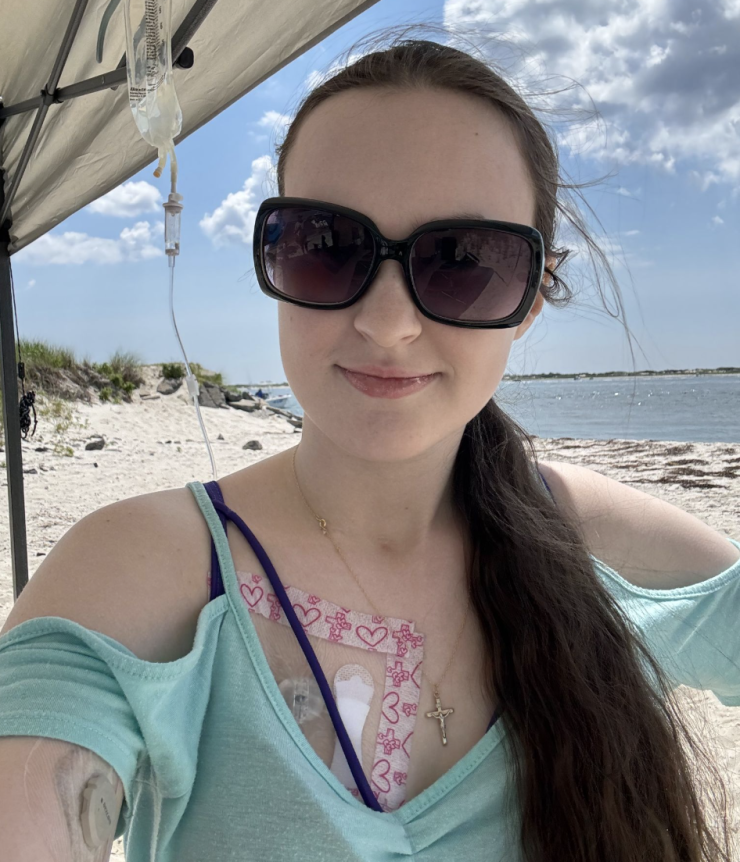
By the time Theresa reached her late teens, she started to realize something didn’t quite add up. She was always tired, even when she had slept. Pain hung around longer than it should have.
At first, she assumed it was normal. Maybe the price of being active, of pushing herself through sports and busy days. But eventually the symptoms began stacking up in ways that were harder to ignore.
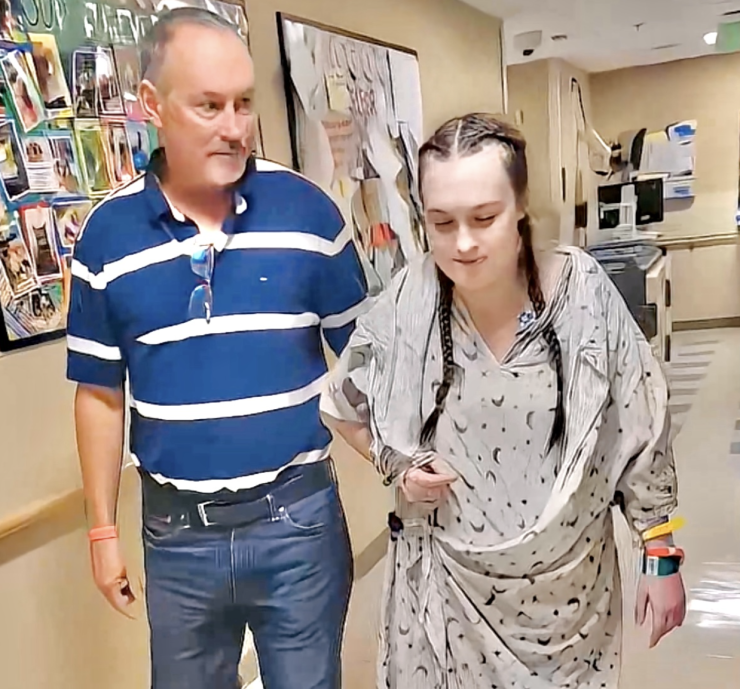
Years later, Theresa finally got an answer.
She was diagnosed with Ehlers-Danlos Syndrome (EDS), a genetic connective tissue disorder. Because connective tissue exists throughout the entire body, EDS can affect almost every system.
And for Theresa, it does.
Her joints are extremely unstable, especially in her hips, shoulders, and knees. Some days, walking even short distances can be difficult if joints slip out of place.
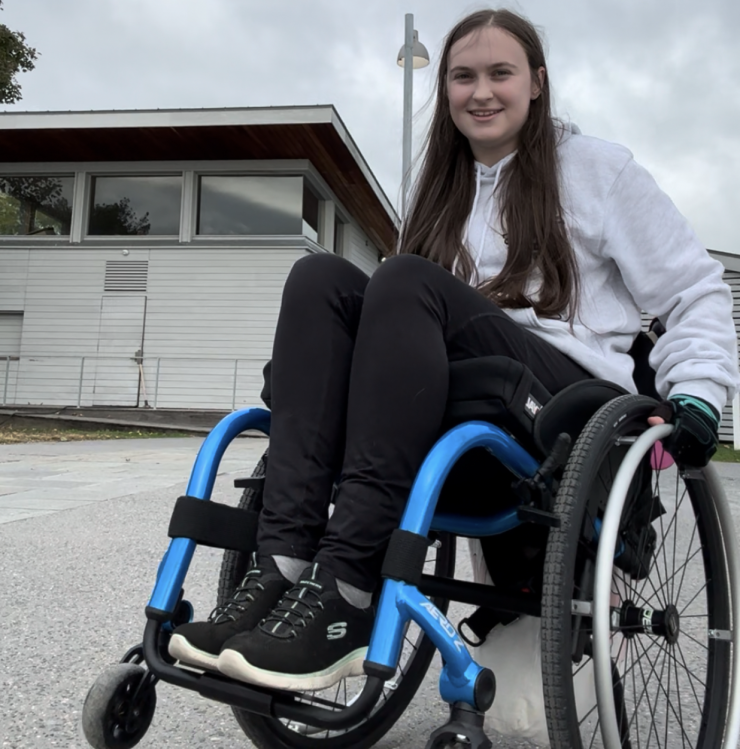
She also lives with Postural Orthostatic Tachycardia Syndrome (POTS), which causes her heart rate to spike dramatically when she stands or walks. Something as simple as moving around the house can send it climbing.
She also has gastroparesis, which has made eating normally nearly impossible. After feeding tubes were no longer tolerated, Theresa now relies on IV nutrition through a central line — known as TPN — for about 12 hours every day.
She even experiences reactive hypoglycemia, which can cause dangerous drops in blood sugar, sometimes before she even realizes what’s happening.
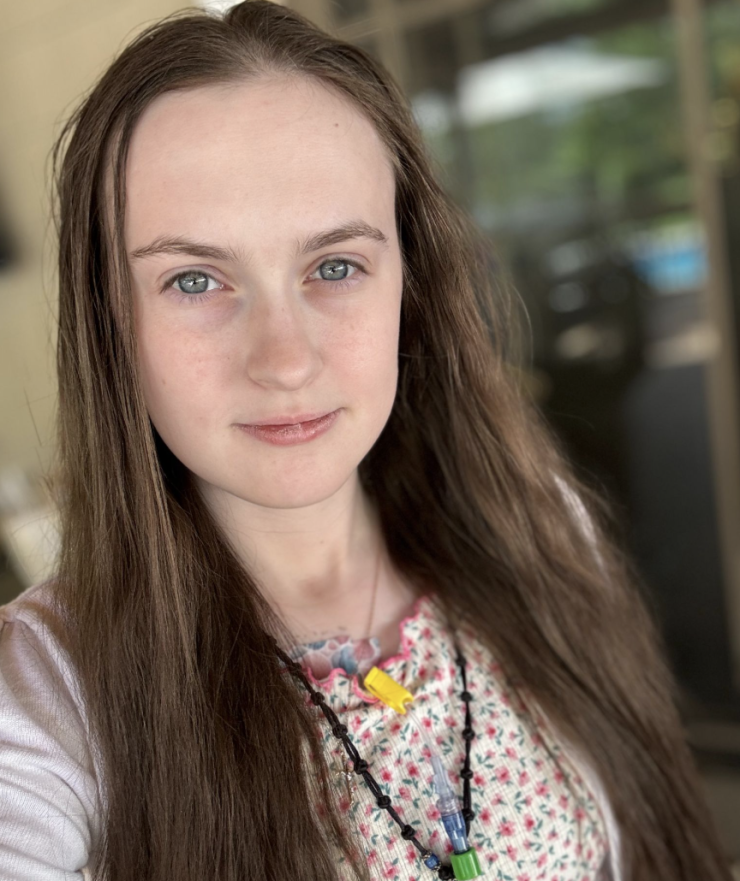
Each condition brings its own set of challenges. Together, they shape nearly every part of Theresa’s daily life. It’s a lot.
But the hardest part isn’t always the diagnoses themselves. It’s the constant awareness they demand. Chronic illness does not clock out, and neither can Theresa.
Every day requires paying attention to her heart rate, hydration, blood sugar, pain levels, energy, and symptoms that can change without much warning. One small shift can turn an ordinary moment into something more serious.

“It’s like constantly self-monitoring,” Theresa said. “And it’s exhausting.”
For people who have never lived with chronic illness, that reality can be hard to understand.
“I think it’s very hard for healthy people to conceptualize what being chronically ill means,” she explained. “They get sick, they go to the doctor, and then they get better. They’ll say, ‘Oh, you’re still sick?’ And it’s like… yes. Because it’s chronic.”

There isn’t a cure that fixes everything. Instead, Theresa’s weeks are filled with physical therapy, doctor appointments, treatments, and careful planning around the medical equipment she relies on every day.
“My life unfortunately revolves around my chronic illnesses and what they will allow me to do,” she said.
Still, Theresa finds happiness in the things that make her world feel full, especially the animals that share it with her.
Her service dog, Booth, a lab mix, has been by her side for years. Booth was originally trained to help with anxiety, but over time, he began alerting Theresa to something else entirely.
Her heart rate.
Sometimes, he would start alerting her before she even realized anything was wrong.
“I’d check my heart rate and realize it was really high,” she said.
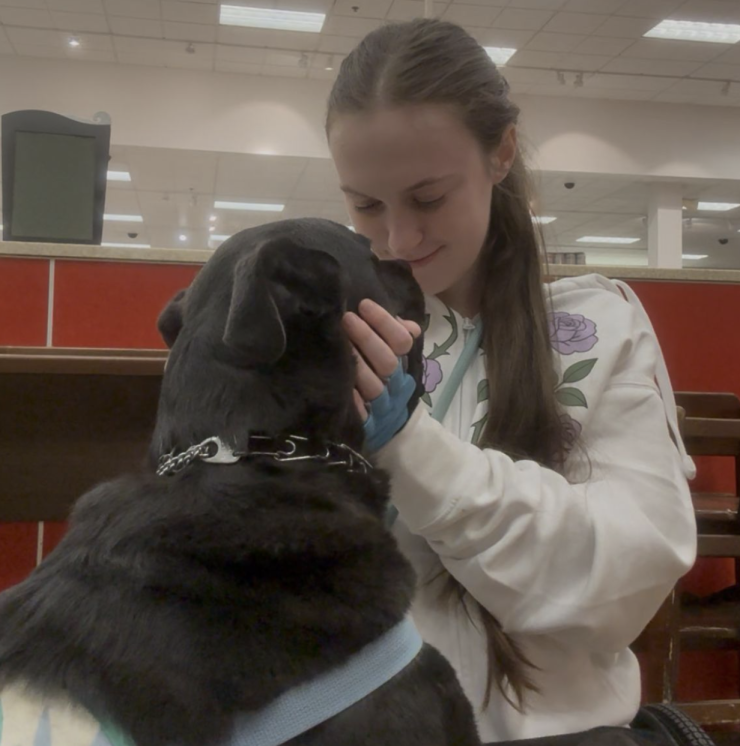
Now about nine years old, Booth is mostly retired, though Theresa still affectionately calls him her “little old man.”
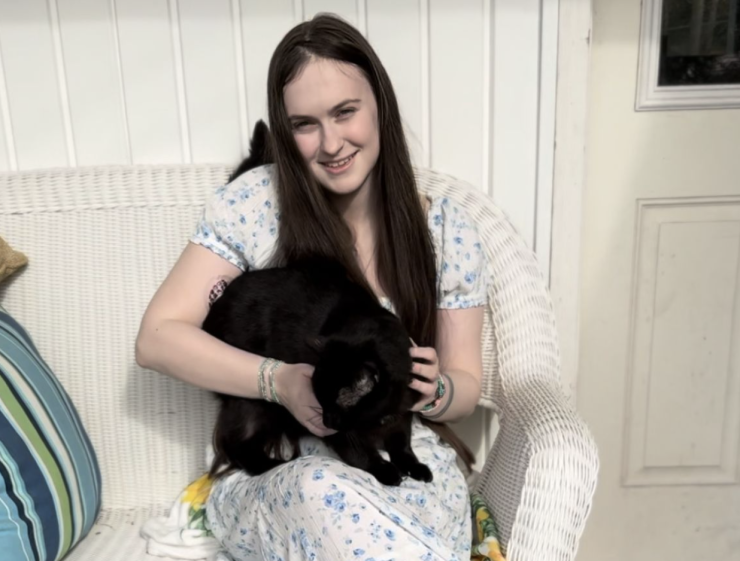
Her home also includes three black cats — Fiona, Loki, and Cameron — each with a personality all their own, along with a bunny named Lola.
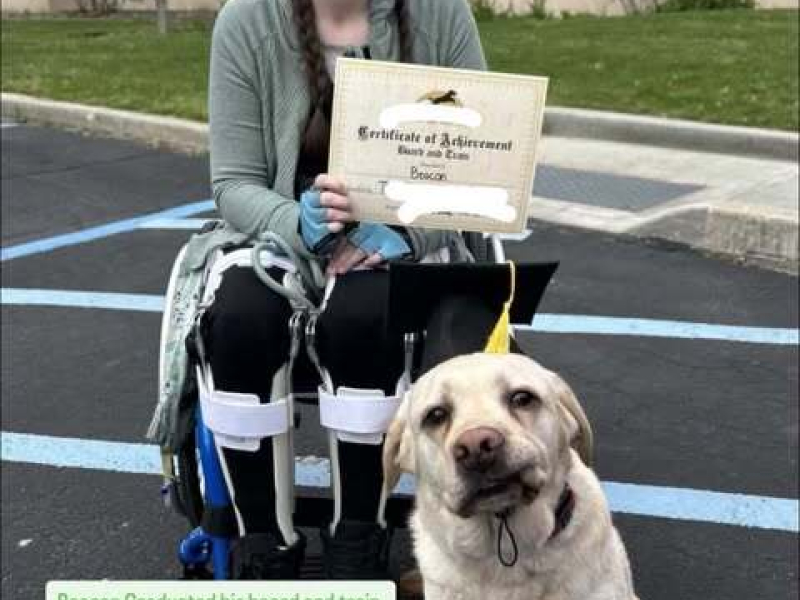
But the newest member of the family may soon take on a very important job: a yellow lab named Beacon.
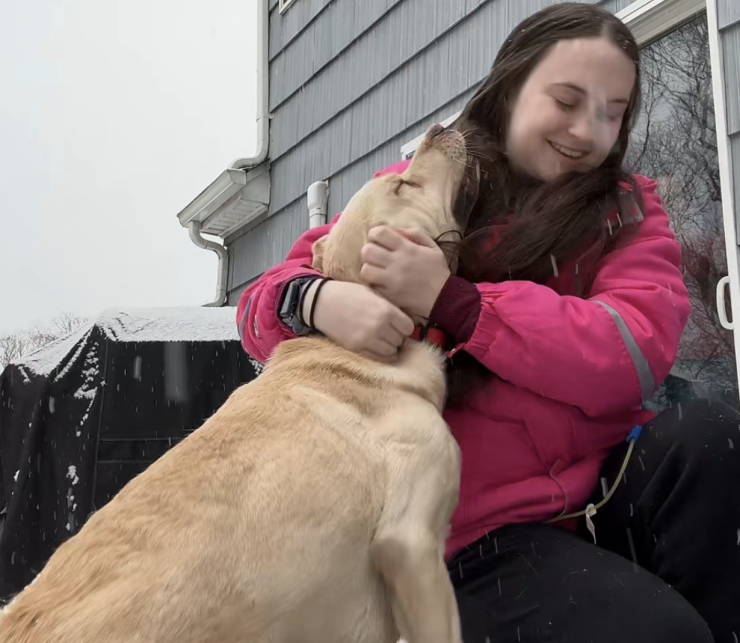
Beacon came into Theresa’s life as a tiny puppy after she and her mom made the long drive from Long Island to Michigan to bring him home. Even then, the goal was clear: train him to become her next service dog.
“He was the biggest puppy in his litter,” Theresa said. “But he was still so little.”

Now older and eager to learn, Beacon has the potential to become an incredible support. Once trained, he will be able to alert Theresa to drops in blood sugar, dangerous spikes in heart rate, and assist with mobility when needed.
For someone who has spent years monitoring her body minute by minute, that kind of help could make an enormous difference.
“I feel like a lot of things will be easier,” Theresa said. “I won’t have to self-monitor so much.”

Training a service dog requires time, professional guidance, and resources. Theresa had been trying to figure out how to get Beacon the training he needed before he aged out of the ideal training window.
That’s where Chive Charities stepped in.
With support from the Chive community, Beacon will now receive professional service dog training to help prepare him for the role he was meant to fill.
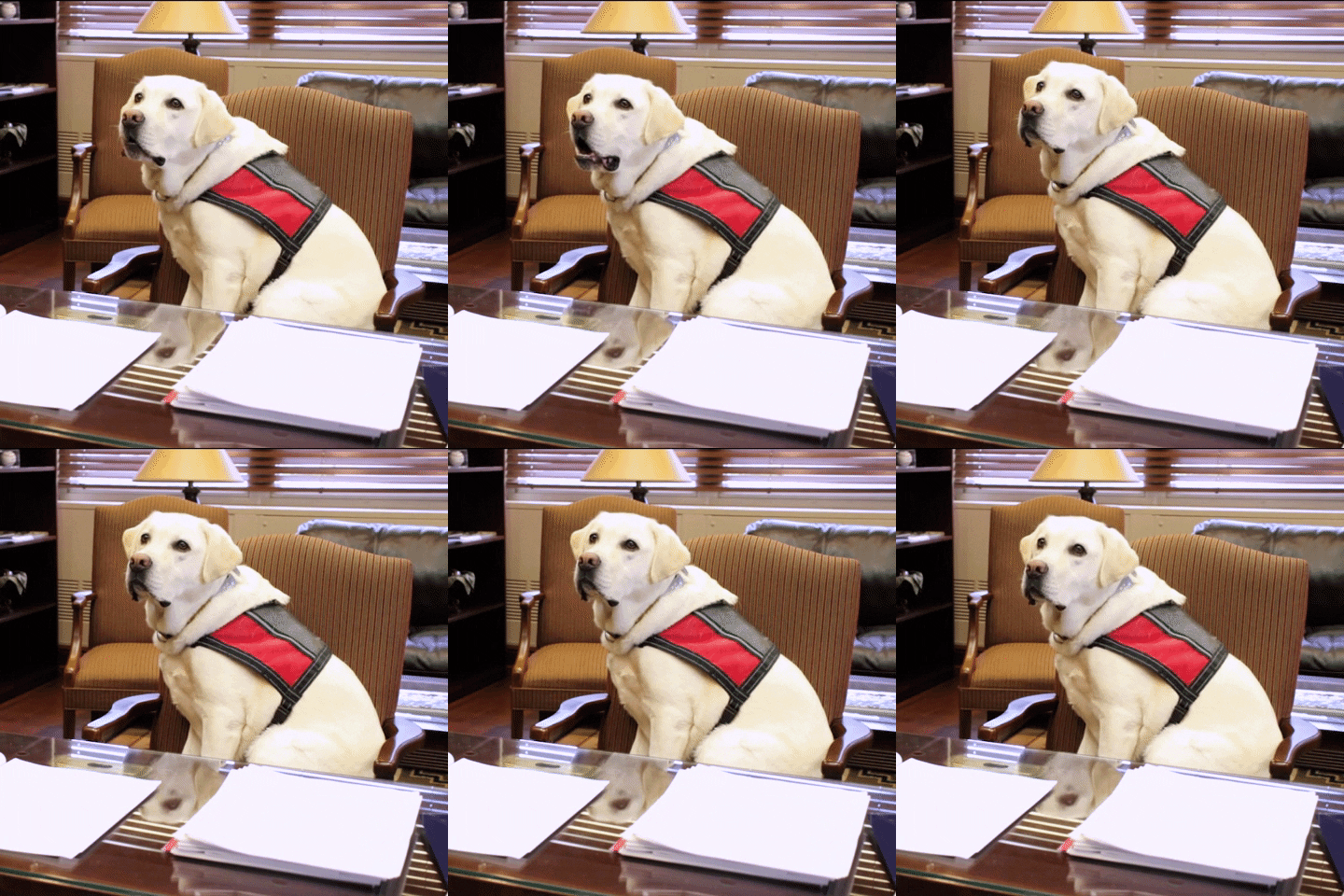
He’ll learn to recognize subtle changes in Theresa’s body and respond in ways that could prevent medical episodes or help her conserve the limited energy she has each day. He’s going to become a literal watchdog. (Total impact: $6,734.)
For years, Theresa has had to carry the responsibility of watching her own health every moment of every day. But soon, Beacon will help share that responsibility, and that means everything.
Even on the hardest days, Theresa holds tightly to the things that keep her going.
“My faith brings me a lot of comfort,” she said. “I love my animals. I love my friends and family.”
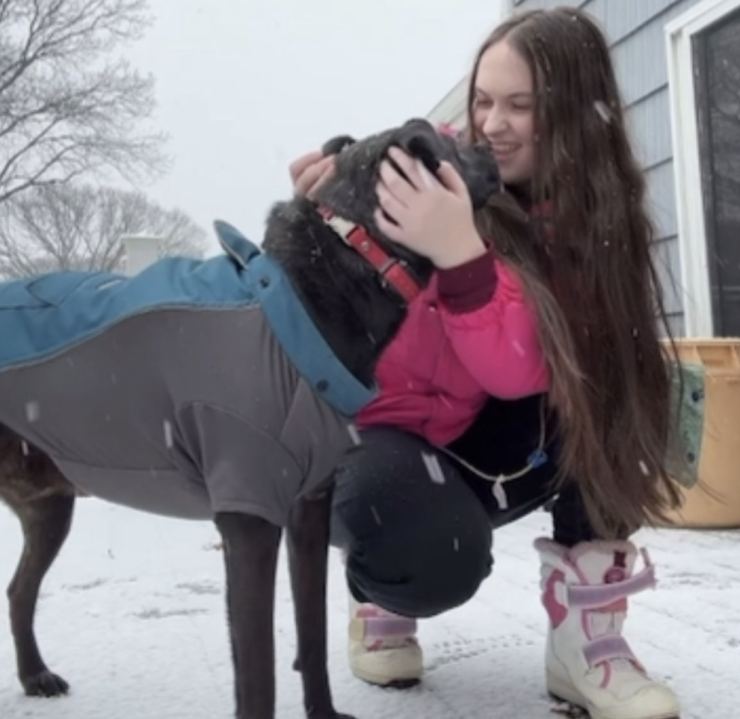
Living with chronic illness means learning to adapt to whatever each day brings. Some days are easier than others.
But Theresa keeps moving forward.
And soon, with Beacon by her side, she won’t have to carry the watch alone. Thanks to the Chive Charities community, Beacon will soon begin training to become Theresa’s newest watchdog – helping her monitor the health challenges she has been managing on her own for years. Good boy, Beacon. Well done, Theresa. And thank you, Chive Nation. DONATE HERE.