



























-3__small.jpg)


__small.jpg)


__small.jpg)


_with_flag,_jason__emily_rowley-4__small.jpg)


-2__small.jpg)


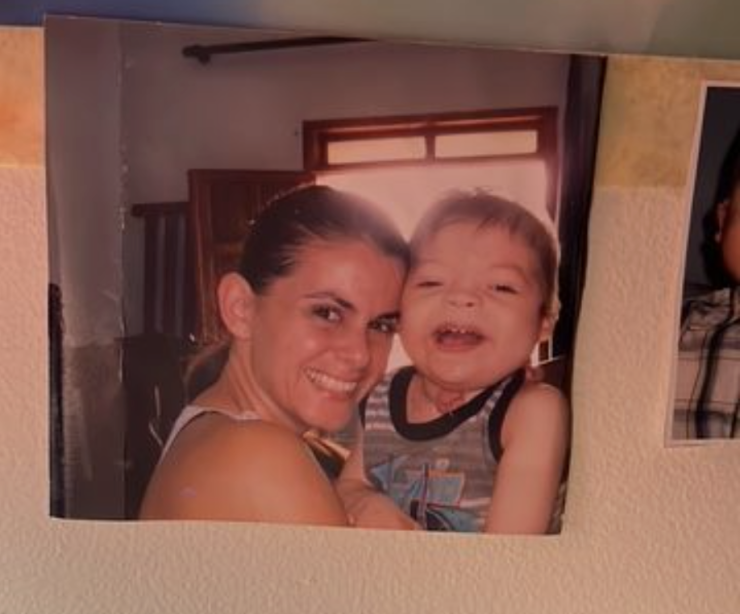
The baby you once carried against your chest now weighs nearly as much as you do.
You still lift him. You still cradle him. But now you brace first. You tighten your core. You count under your breath. You hope your back holds.
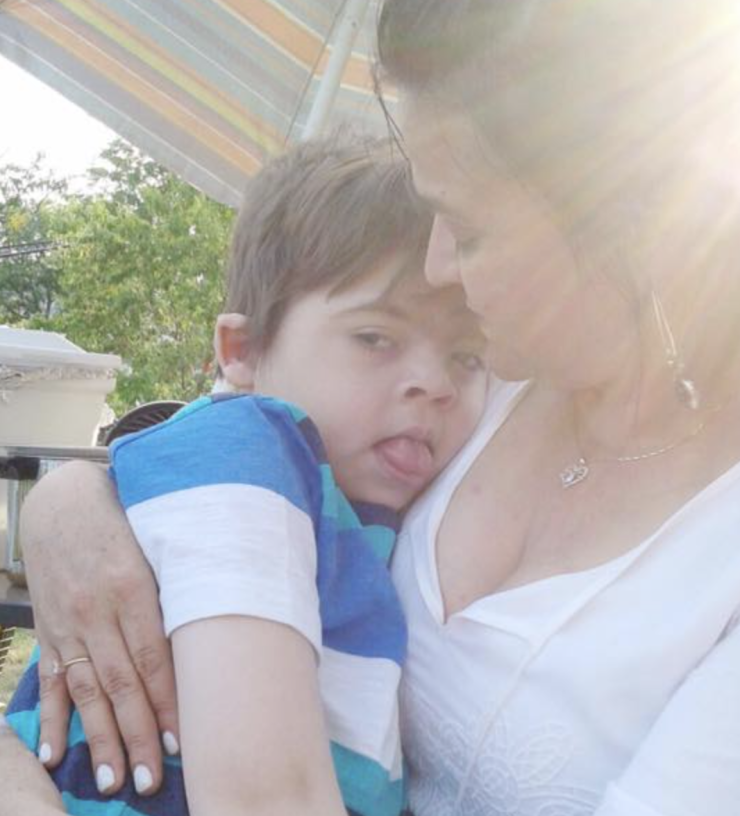
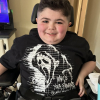
Your son Zachary is 17 years old. When he was four — after a medical crisis that left him between life and death — you finally received the diagnosis: Kleefstra syndrome.
Before that diagnosis, there were walks.
You went to church. You went to children’s parties. You watched him splash in the pool like a little duck, water wrapping around him like it understood him. He loved the pool. He loved swinging in the backyard. Back and forth. Back and forth. That was Zack’s fun.
When he was born, you noticed something different. The doctor told you he was normal. You tried to quiet the instinct in your chest.
But then everything changed. Then they said those words that confused you. Shook you. Took the air from you. Kleefstra syndrome.
You remember being alone. No family nearby. Just you and a computer screen glowing in the dark. You read everything you could. Some children could live relatively typical lives.
But your son’s case was the most severe stage you could find.
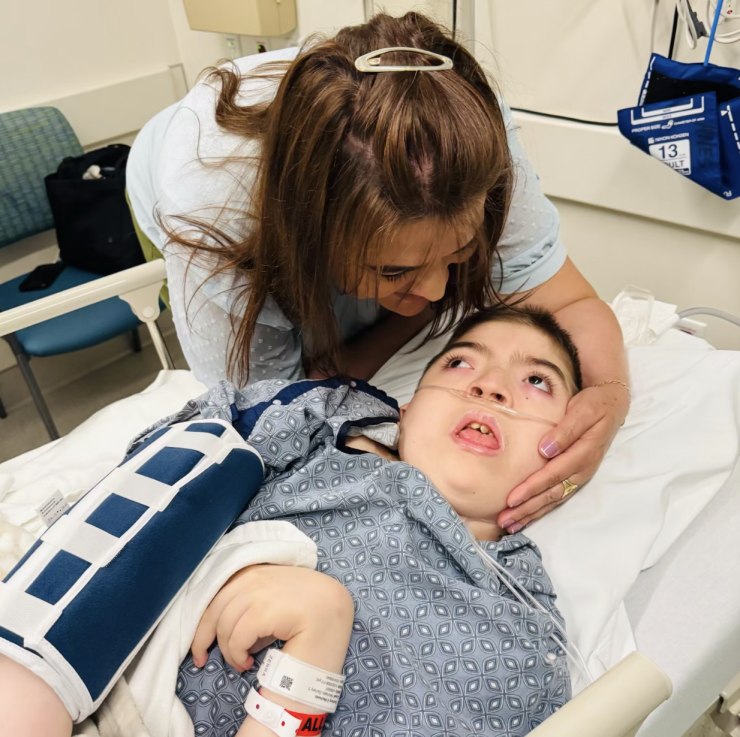
You cried day and night. You asked God why. You wanted to scream so the world would understand the size of your pain.
But who would be there to listen?
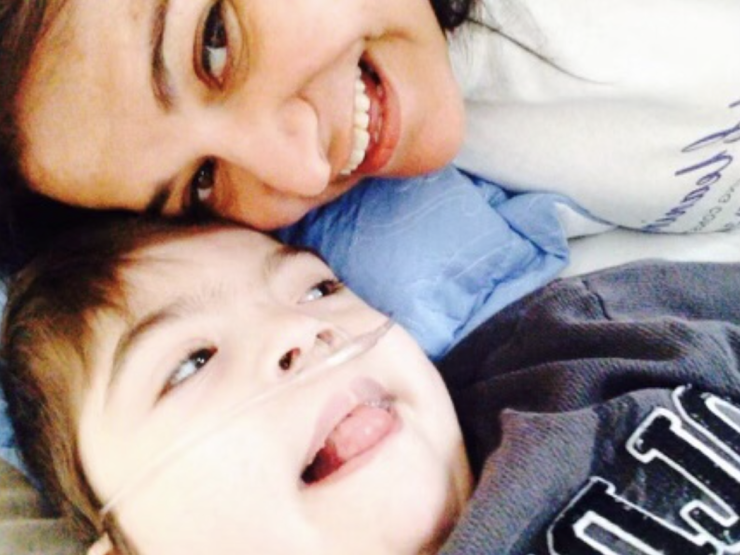
At 1:00 a.m., you went back to his bed. You wrapped your arms around him and made a promise through tears.
“Mom’s gonna be with you… I’ll fight for you so your life is filled with happiness and love.”
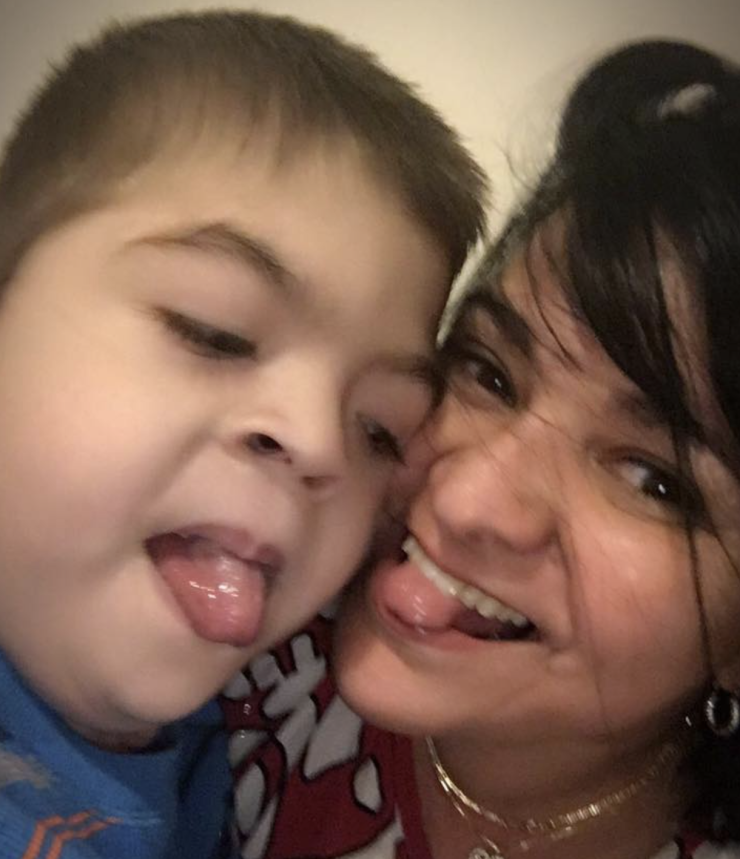
Your life changed direction that night. And you have kept that promise every single day since.
For 13 years, you have lifted him.
From bed to chair.
From chair to bath.
From hallway to backyard.
From indoors to sunlight.
Every transfer requires strength. Every transfer costs you something.
But Zachary is more than the weight you carry.
He is joy.
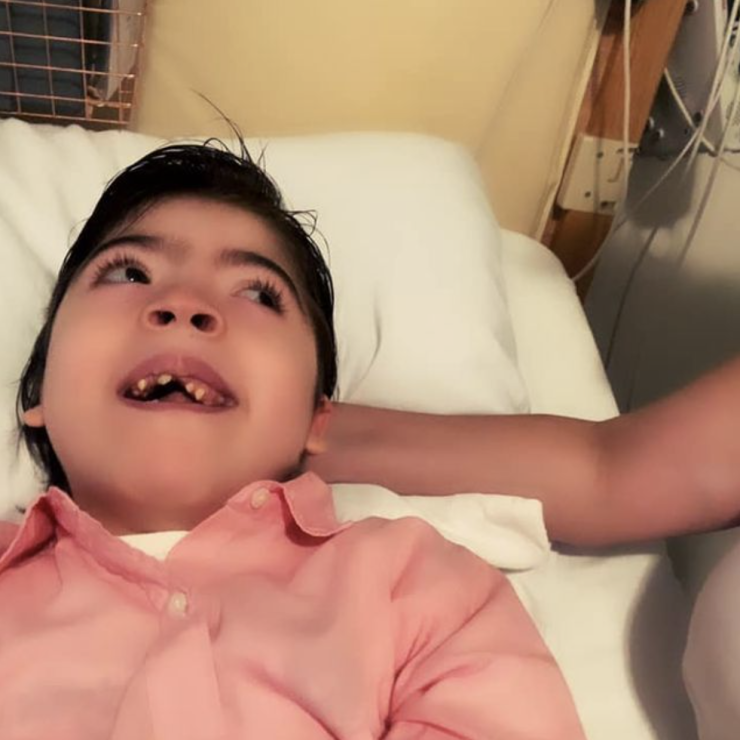
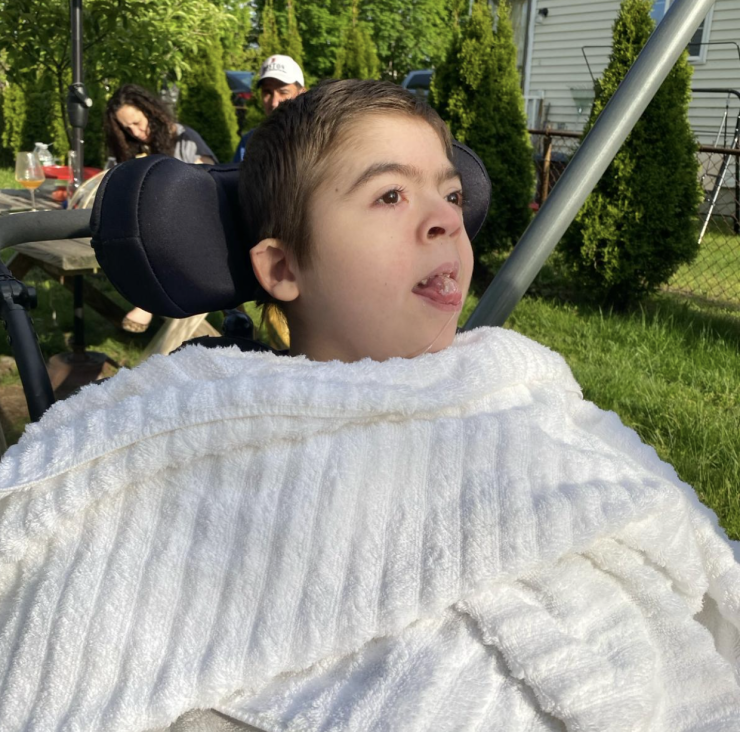
When you walk into his room — or when a family member steps through the door — his face lights up instantly. He loves being surrounded by his people. He loves watching his nephews run and play outside. He used to sit in his swing and be right there with them, part of the action, rocking back and forth, back and forth, as they laughed.
That swing was his favorite place to be.
Inside, he fills the room with music.
Portuguese songs. Show tunes. Anything upbeat.
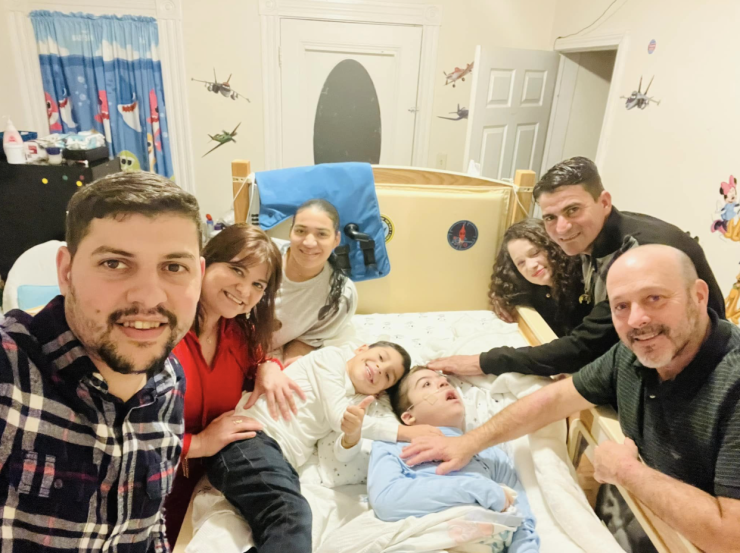
Recently, his occupational therapist and teacher introduced a switchboard. With a joystick, he can now play, skip, and turn the volume up and down himself. He gets to choose what he listens to. You smile as you watch him demonstrate his independence.
He loves watching TV and movies — from his favorite Brazilian animated show, Smilingüido, about a family of ants, to classic Disney films. Music playing. Movie on. Family nearby.
This is his happiness.
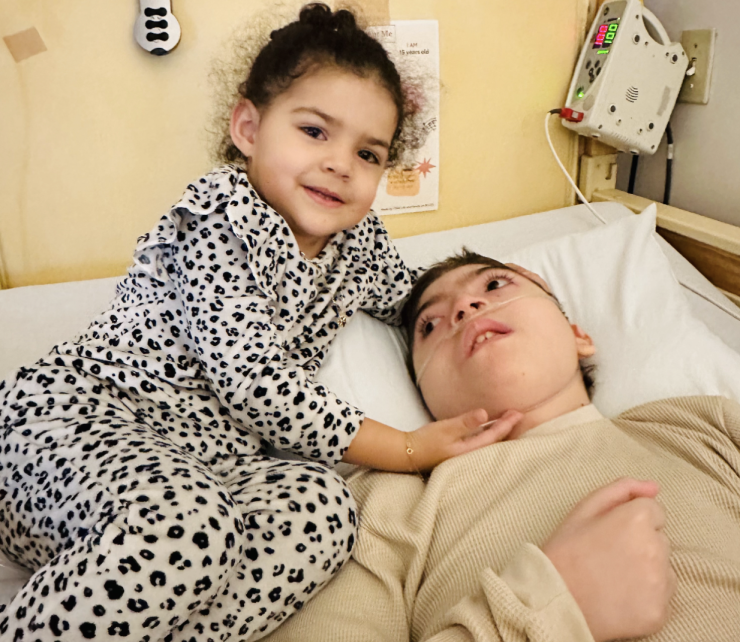
Then one morning, he wakes up, hitting his hand against the bed. You immediately recognize what he wants.
The bath.
Water is still his little world.
You tell him you’ll take him for a warm shower. He raises his thumb and smiles — his quiet “yes, Mom.”
You move to lift him into the bath chair, and your back won’t cooperate.
You try again.
Pain shoots through you.
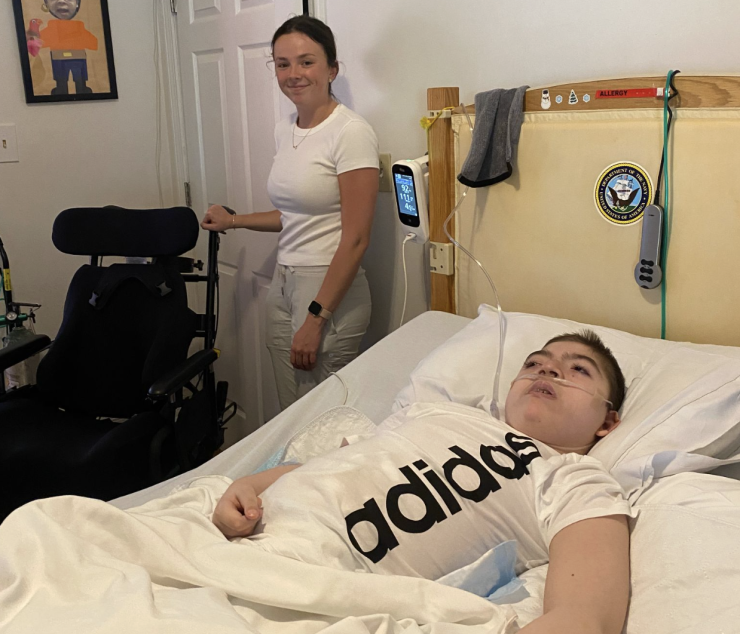
You begin to cry — not because you’re hurt, but because you realize something has shifted.
For years, you could do this. Now you can’t.
You bathe him in bed that day. It’s all you can manage.
But you see it in his eyes.
He isn’t happy.
“It was the saddest night of my life,” you later say. “Knowing I couldn’t give him a bit of joy that made him feel free under the water.”
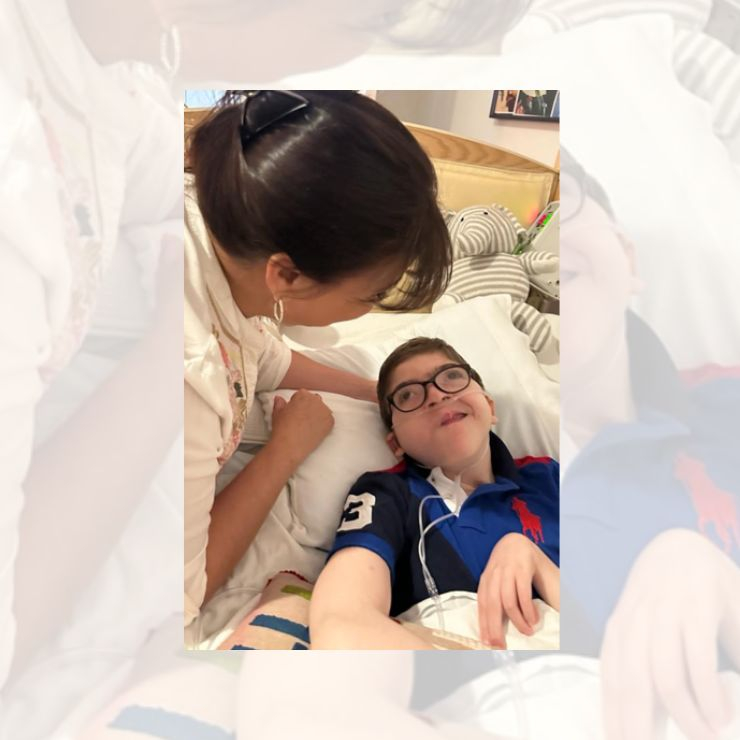
From four years old to 17, you carried him.
Now at 18, your back is worn down.
Transferring him has become painful for both of you.
And there is something else. He is breathing mostly from one lung now. You’ve been told that sitting upright more consistently could help open the other one. That sitting more could help him breathe better.
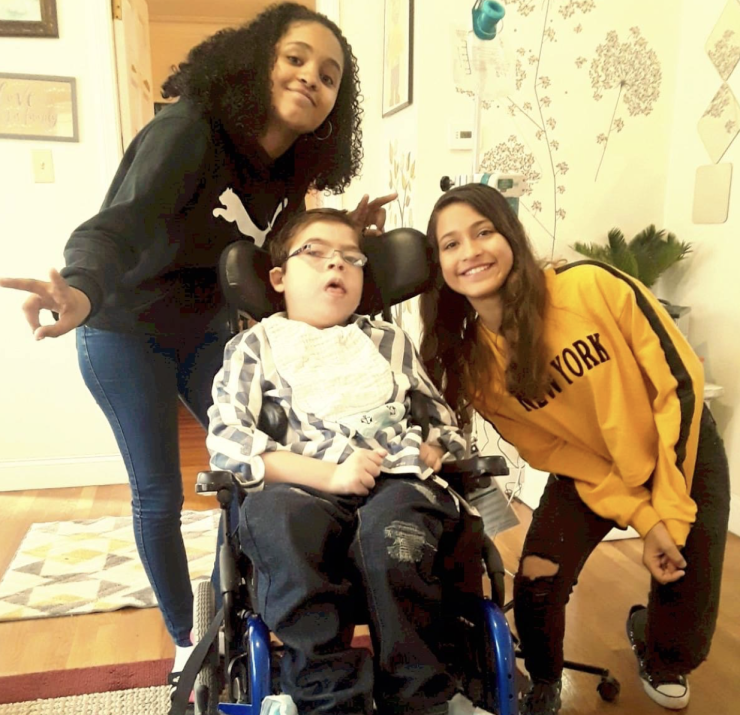
Sitting.
Swinging.
Bathing.
Being eye-level with his nephews.
Choosing his own music while upright in his chair.
Simple things. Things most people never think twice about.
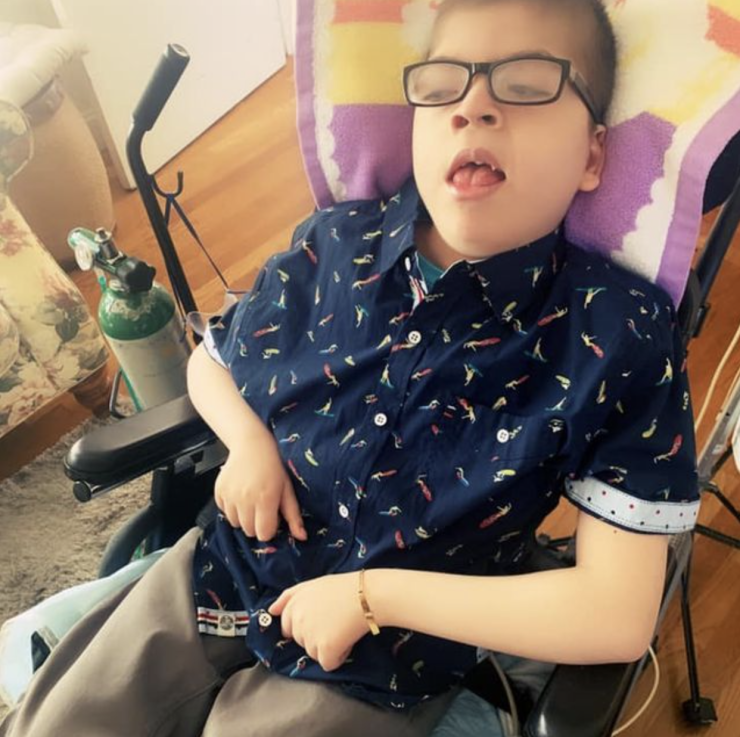
But for you, these small things require enormous strength.
Later, you find yourself back on the computer in the middle of the night — only this time, you’re not searching for a rare disease that knocks you to your knees.
You’re searching for help.
Help to lift your son safely.
Help to protect your back.
Help to let him sit upright and engage with the world more often.
Help to give him back the swing he loves.
With a prayer still resting on your lips, you submit an application.
You don’t ask for much. Just an overhead Hoyer lift, so transferring him out of bed can be safe and comfortable for both of you. So he can move into his wheelchair more easily. So he can engage with his environment and family more often.
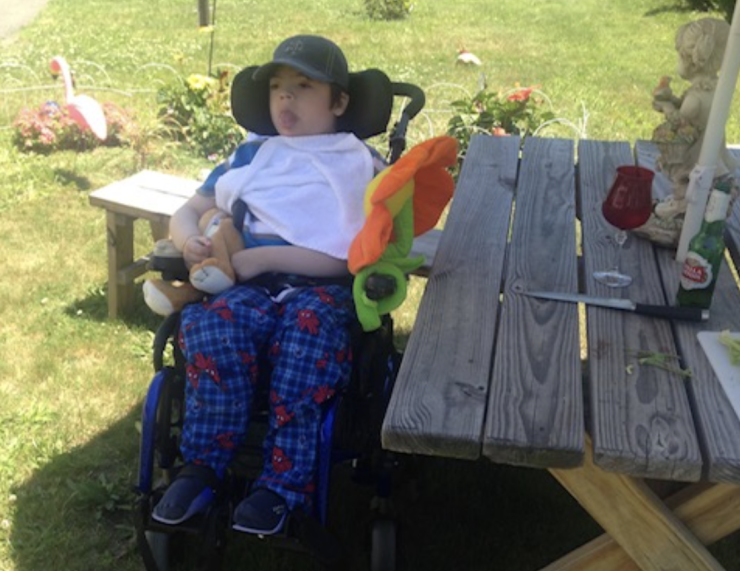
And you ask for an accessible outdoor swing, so he can feel movement again. Sunlight again. That simple back and forth. Back and forth. The joy that has always been his favorite.
You write that being able to transfer him safely would feel like “winning the lottery.”
You write that giving him back his bath, his swing, his smile… “has no price.”
Because it doesn’t.
When the Chive Charities community says yes, your eyes fill with tears. The dollar amount says the impact is $14,470. But you know it to be priceless.
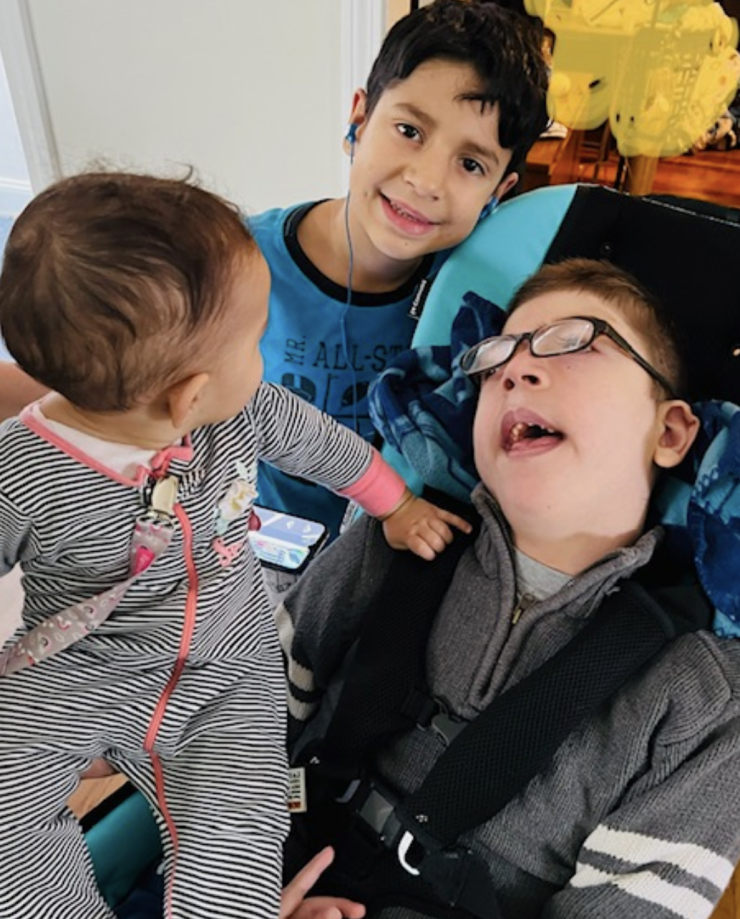
Because the Hoyer lift protects your spine and gives your son safer transfers.
The accessible swing brings him back outside — back to watching his nephews, back to feeling the breeze, back to being part of the world instead of only observing it from bed.
You will be able to bathe him without tears.
You will be able to transfer him safely.
You look at your son.
Your joy.
Your purpose.
You think of the promise you made at 1:00 a.m. all those years ago.
And for the first time in a long time, you smile again — full and free.
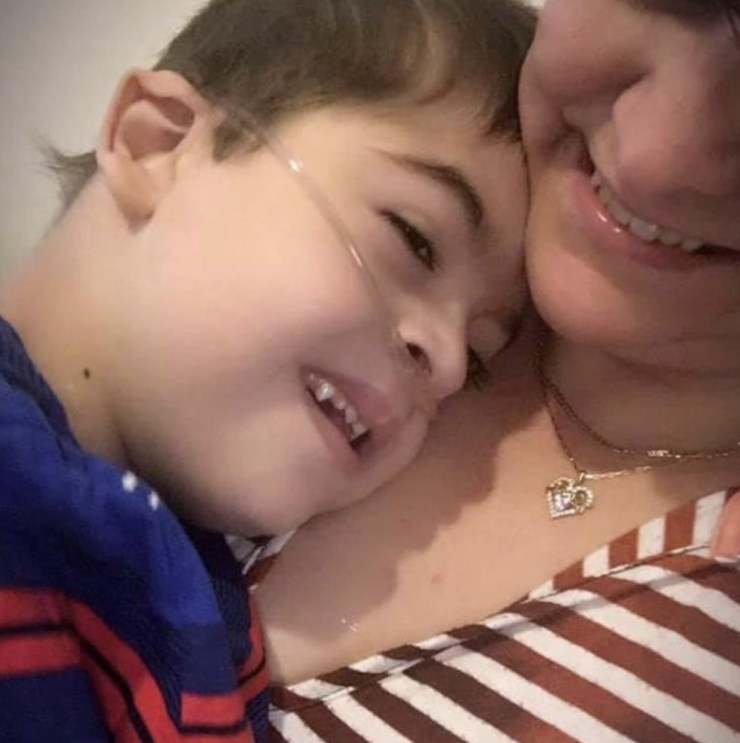
You think of every Chive Charities donor who made this possible. Because they didn’t just fund equipment.
They gave a young man more access to his world.
They restored dignity to daily routines.
They gave him back his swing. And now, you will be able to watch him swing again — sunlight on his face, music in the background, his body rocking gently back and forth. Back and forth.
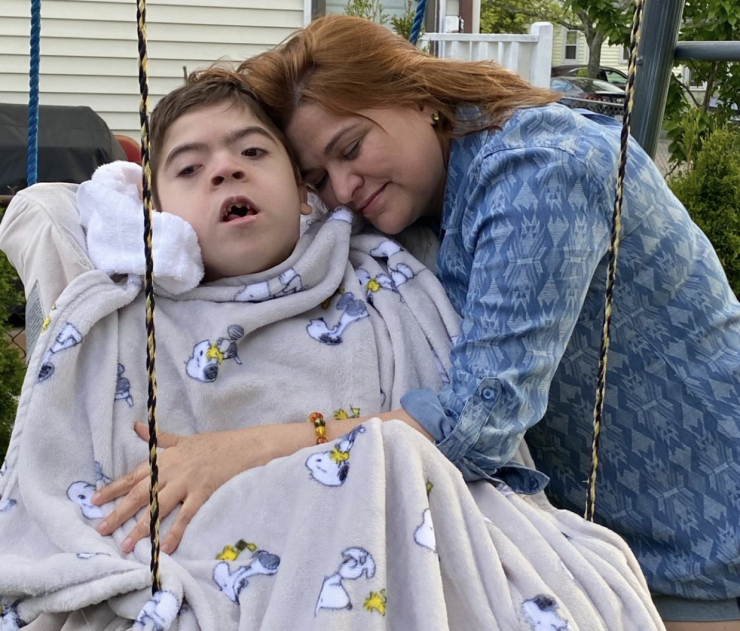
Sometimes a miracle isn’t loud.
Sometimes it looks like a lift. A joystick playing music. A swing. And a mother who can finally take a deep breath and smile – full and free. DONATE HERE.
The Breakdown
Who did Chive Charities help?
A single mother caring for her 17-year-old son with Kleefstra syndrome.
What support was provided?
An overhead Hoyer lift for safe transfers and an accessible outdoor swing for mobility and outdoor engagement.
How much was raised?
$14,470.
Why was the support important?
It protected the mother’s spine, improved her son’s breathing through upright seating, restored safe bathing, and returned outdoor joy and dignity to daily life.
What impact did donors have?
They didn’t just fund equipment — they restored independence, connection, and quality of life.