






























-3__small.jpg)


__small.jpg)


__small.jpg)


_with_flag,_jason__emily_rowley-4__small.jpg)


-2__small.jpg)



It happens quietly. Not all at once, but in a series of small calculations. Can we get there? Will the ride show up? Will the lift work? Will there be space? Will she be able to breathe?
For Sage, those questions have been part of life for as long as she can remember.
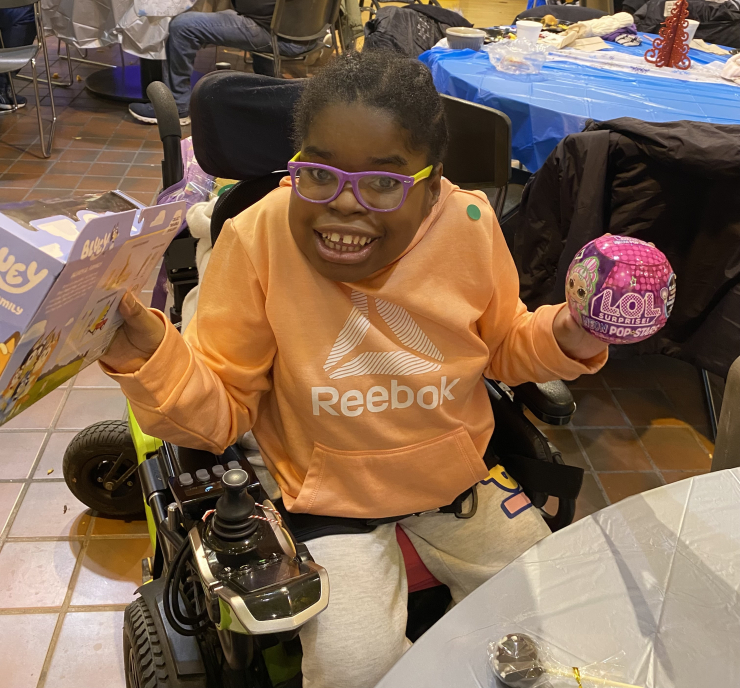
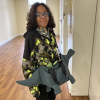
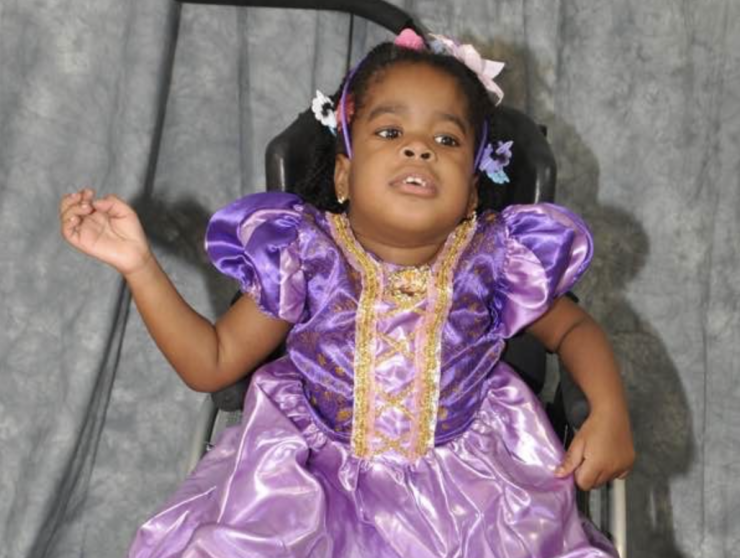
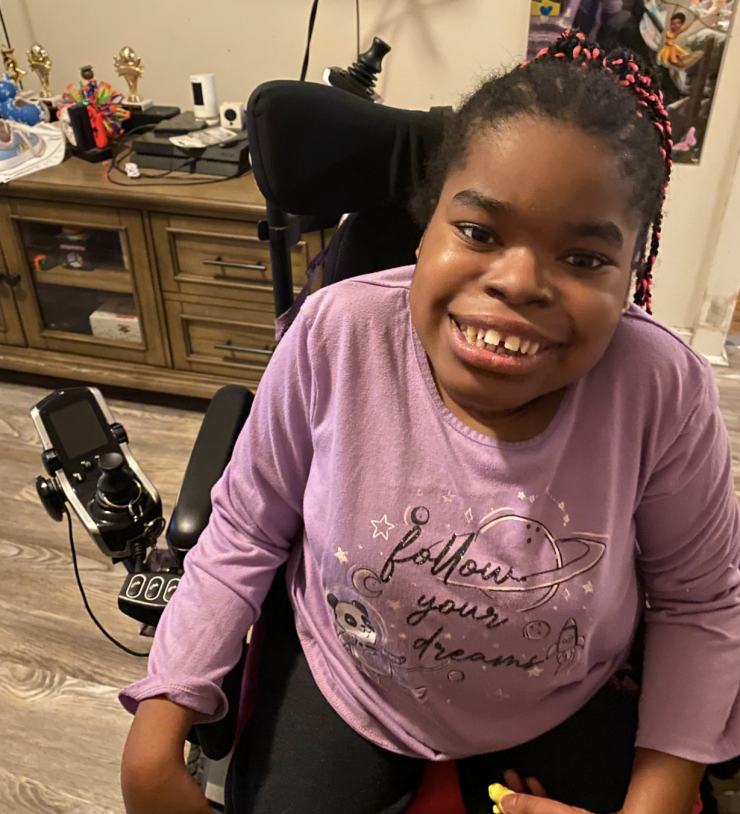
She was born with muscular dystrophy and chronic lung disease, a combination that has shaped how she moves through the world, literally and figuratively. By the age of three, she was using a wheelchair.
Over time, that became a power wheelchair, not just a tool for mobility, but an extension of who she is. Add in oxygen, medical equipment, and the everyday realities of being a medically fragile child, and something as simple as leaving the house becomes anything but simple.
And yet, if you ask Sage what she wants, the answer is beautifully uncomplicated.
She wants to go.
To school. To the aquarium. To Comic Con. To see her friends. To play. To be part of things. To live a life that feels wide open, not carefully measured.
Because at her core, Sage is still just a kid.
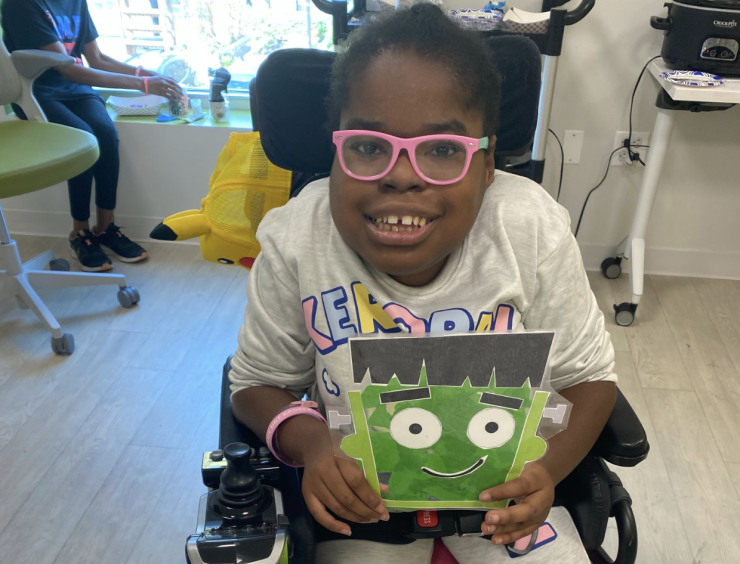
A kid who loves tiny toys she can hold in her hand. A kid who will absolutely talk your ear off about toys if you let her. A kid who watches her favorite shows in different languages just because she can. A kid who races her friends in power wheelchairs like they’re go-karts and laughs the whole way through.
Her mom describes her world as “rainbows and unicorns,” not because life has been easy, but because Sage chooses joy anyway.
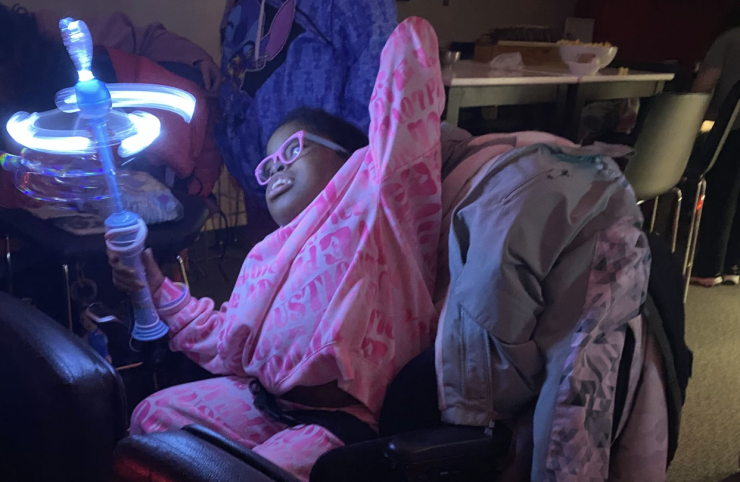
And really, she has every reason not to.
There have been hospital stays and long stretches of uncertainty. Years where answers were hard to come by. A spinal surgery that changed everything—correcting her scoliosis and, in the process, giving her something she hadn’t fully had before: the ability to breathe deeper.
Before the surgery, she would come home from school exhausted, needing to lie down, her body quietly working overtime in ways no one could see. Now, she moves through the house with purpose, reaching for toys, navigating her space, claiming her independence in small but powerful ways.
“I can drive myself,” she’ll say.
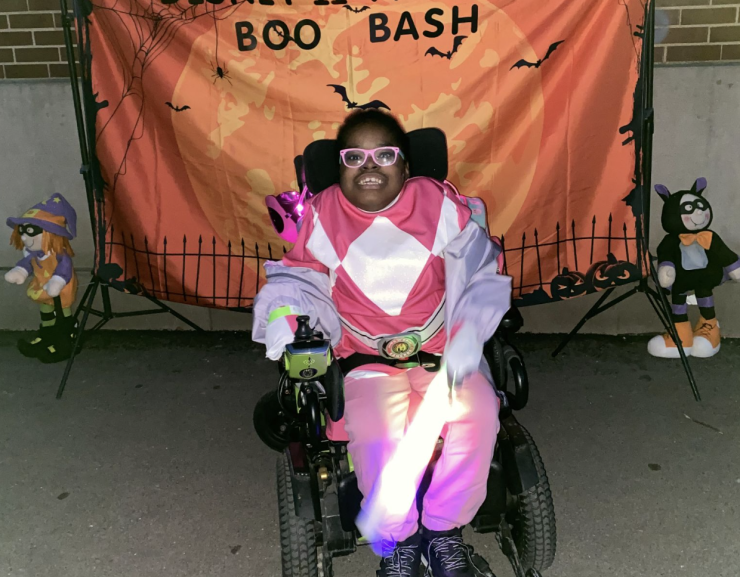
And that might be the most remarkable thing about Sage. Not just her resilience, but her voice.
She has learned how to advocate for herself in a world that doesn’t always make space for her. She knows when she needs help and, just as importantly, when she doesn’t. She tells her mom when it’s time to step back. She navigates hallways, conversations, and life with a confidence that has been hard-earned.
But even the strongest voices can’t fix a broken system.
Because the truth is, for families like Sage’s, transportation is everything.
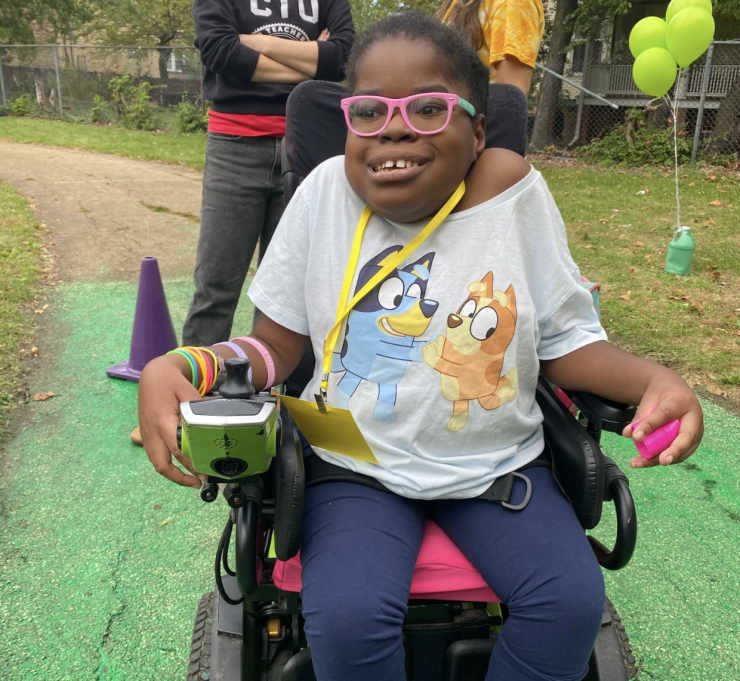
In a city like Chicago, where public transportation is often assumed to be accessible, the reality tells a different story. Rides that don’t show up. Buses that are late or never come at all. Elevators that are broken. Vehicles that can’t accommodate a power wheelchair. Systems that require meticulous planning for something as simple as going to school or attending a weekend event.
There’s no spontaneity. No quick trips. No “let’s just go.”
Every outing becomes a gamble.

And when Sage was recovering from surgery, that gamble became even more complicated. Her mom rented wheelchair-accessible vans when she could, trying to get her to appointments, trying to give her some sense of normalcy. But renting a van once a month isn’t the same as having the freedom to live your life.
So Sage waited.
She waited at school for buses that were late. She waited at home while her brother went out into the world. She waited for weekends when maybe—just maybe—there would be a way to go somewhere, to do something, to be included.
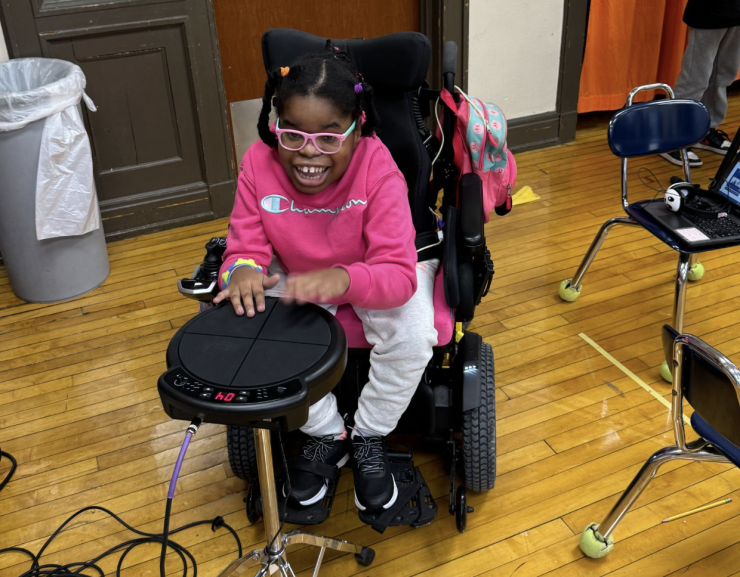
And through all of it, she kept asking the same simple questions.
“Are we going to be able to go?”
That question carries more weight than it should.
Because every child should be able to go.

To the after-school club where they make bracelets and talk with friends. To the adaptive recreation programs where wheelchairs become racecars and differences disappear. To community events where no one has to explain their story because everyone already understands.
Sage has found those spaces. She’s found her people. She’s found moments where her world feels big again.
But getting there hasn’t been easy. Which is why this van changes everything.
It’s the difference between waiting and living.
For Sage, it means going back to the grocery store with her mom. It means not having to wait in the cold for a ride that might not come. It means being able to say, “Let’s go,” and actually go.

And for her mom, it means something just as powerful.
It means one less barrier in a life already filled with them. One less thing to solve, to plan, to worry about. One more way to give her daughter the life she deserves.
Because at the heart of this story is not just a remarkable kid, but a remarkable mother.
A mother who has spent years navigating a system that wasn’t built for her family. Who has advocated, adjusted, learned, and kept going. Who has created a life where joy is still possible, where independence is encouraged, where her daughter’s voice is heard.
She’ll tell you it’s okay to feel overwhelmed. That you take it day by day. That sometimes you have to stop and “smell the flowers,” even when life is complicated.
And maybe that’s what this is really about.
Not just a van. Not just transportation. But the quiet, powerful way a life can open back up when the right support shows up at the right time.

For Sage, it means fewer limits and more living. More yes. More moments that don’t require a backup plan. More chances to be exactly who she already is—a kid who wants to go, to see, to experience, to belong.
That kind of change doesn’t happen on its own.
It happens because a community chooses to step in. Because people decide that families like Sage’s shouldn’t have to navigate it all alone. Because someone, somewhere, says, "We can make this easier.” Thanks to donors like you, that dream is a reality today, and we were able to fully fund the purchase of a wheelchair-accessible van for a total impact of $55,000.
If you’ve ever wondered what your support can do, this is it.
You can help give families like Sage’s the freedom to move through the world with a little more ease, a little more independence, and a lot more joy. (You just did it!)
Join us. Support Chive Charities. And help make the world 10% happier—one life, one family, one “yes, we can go” at a time. DONATE HERE.
The Breakdown
How did Chive Charities help Sage?
Chive Charities fully funded a $55,000 wheelchair-accessible van for Sage, a child living with muscular dystrophy and chronic lung disease. The van gives her family reliable transportation, greater independence, and easier access to school, appointments, and community activities.