
One is fast. A short drive, a front-door drop-off, and you’re there in minutes.
Joey never chooses that one.
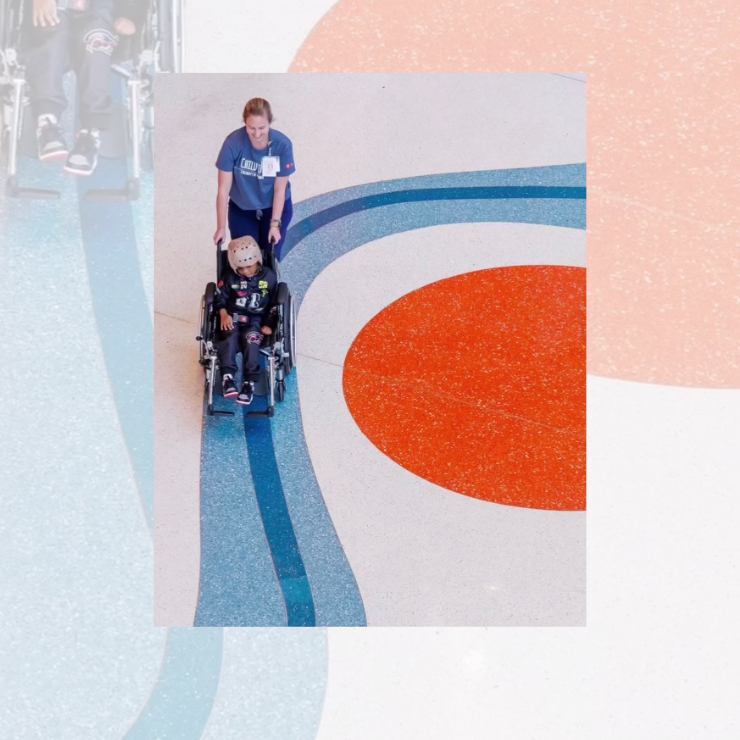
Instead, he starts across the street from the Ronald McDonald House and follows the painted river that winds its way through the hospital. The path moves through hallways and buildings, across a skybridge, down elevators, and eventually—after nearly 40 minutes of walking—ends exactly where he needs to be.
It takes longer. It requires more effort. And Joey refuses to take any other route.
Alicia says hospital staff know the river well. It curves instead of running straight, and Joey gets excited as he follows it, sometimes bumping into people along the way. But no one gets frustrated. They step aside and smile. It’s become an unspoken understanding—this is Joey’s path.

And if you want to understand Joey, that tells you just about everything.
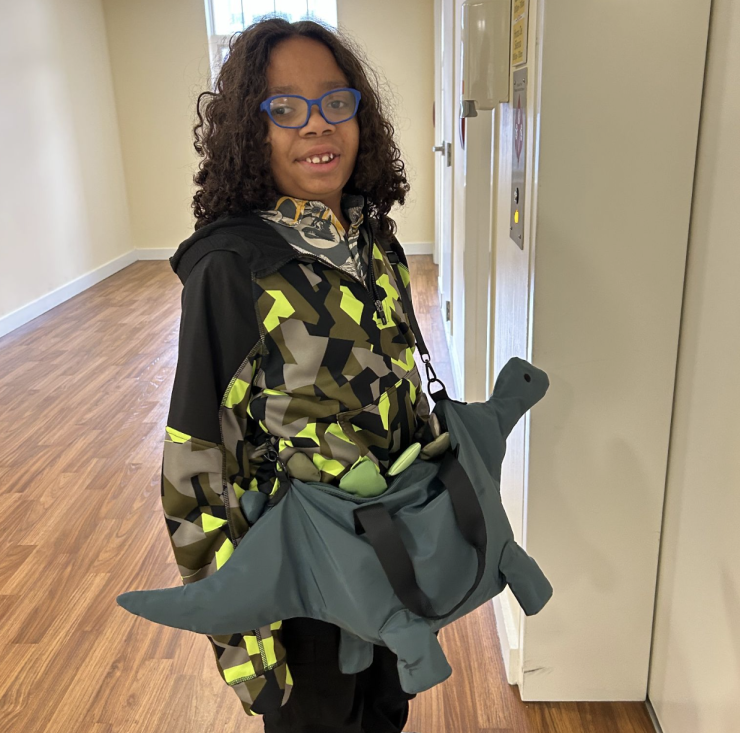
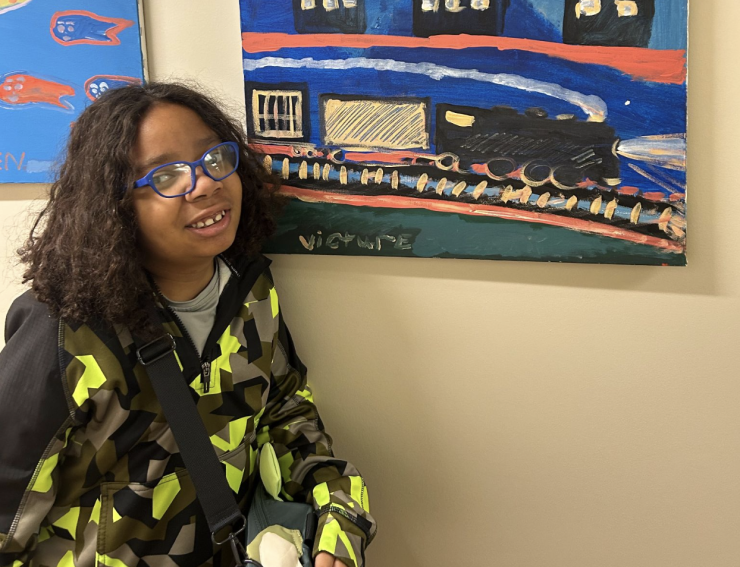
Joey is seven years old, almost eight, and his mom describes him as the kind of kid who changes the atmosphere when he walks into a room. He’s full of life, full of happiness, and has never met a stranger.
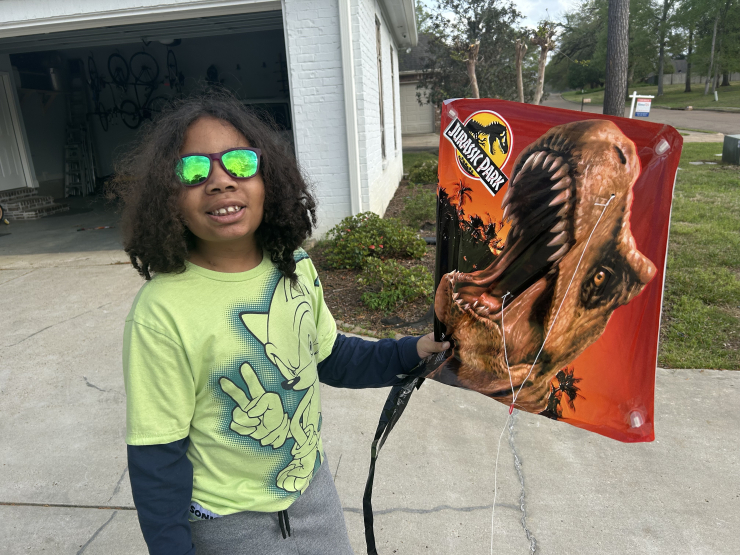
He loves music, dancing, sensory play, and for years, dinosaurs have been his greatest obsession. T. rex is the clear favorite. Recently, trains have entered the picture too. Joey is quick to clarify that this does not replace dinosaurs. He can have two favorites.
Joey was born with Neurofibromatosis Type 1 (NF-1), a genetic condition that causes tumors to grow on nerves throughout the body. In Joey’s case, the tumors affected his vision, caused a tumor near his jaw, and triggered early puberty by disrupting hormone regulation.
He also lives with Autism, ADHD, speech and language delays, and developmental delays.
For years, Joey’s family focused on balancing therapies, school, and daily life while letting him experience childhood as fully as possible. That balance shifted when they began noticing changes in his vision. An MRI confirmed optic pathway tumors, and soon after, Joey’s care team recommended treatment to stabilize the tumors and protect what vision he had.
What followed was not simple.
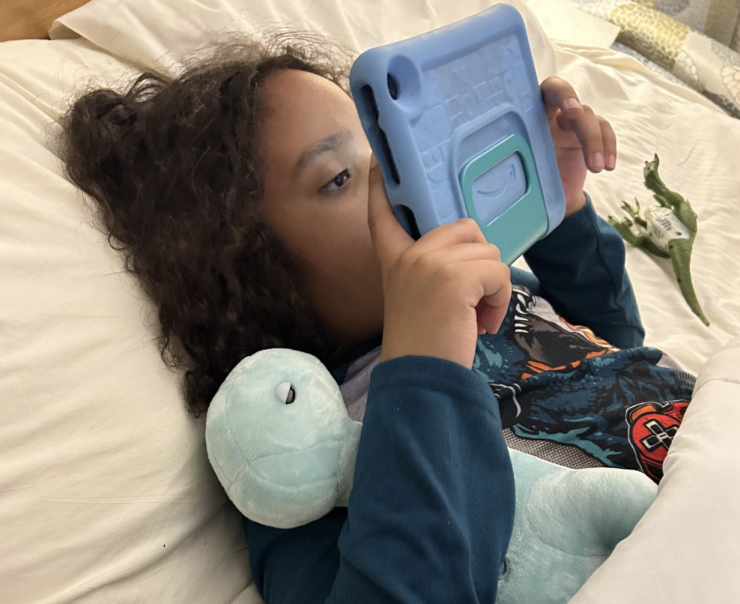
An insurance dispute left Joey’s family in limbo just as they were trying to move quickly. Alicia remembers it as one of the hardest moments of her life—being told her child had brain tumors, then waiting while decisions were made far outside their control. Joey’s neurologist didn’t wait. She referred them to Birmingham, where Joey could receive immediate care.
Birmingham became their new routine.

Every week, Joey and Alicia travel eight hours round-trip from Canton, Mississippi, to Children’s Hospital in Alabama. Thursdays are travel days. Fridays are infusion days. They stay at the Ronald McDonald House across the street, where Joey has built friendships and become a familiar face.
And every Friday morning, when Joey is able, he follows the river.

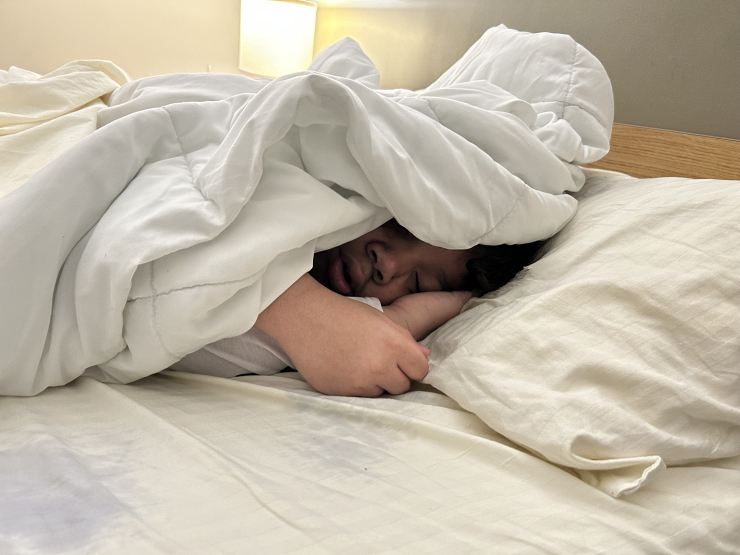
Chemotherapy hasn’t taken Joey’s personality from him, but it has changed his stamina. For a long time, he handled oral medication without any noticeable impact on his energy. When his care team recommended a more aggressive IV chemotherapy regimen—an 18-month protocol—things slowly shifted.
Alicia describes it as a dialed-back version of Joey. He’s still funny. Still engaged. Still determined. But the distance between “I can do this” and “I need to stop” has gotten shorter.
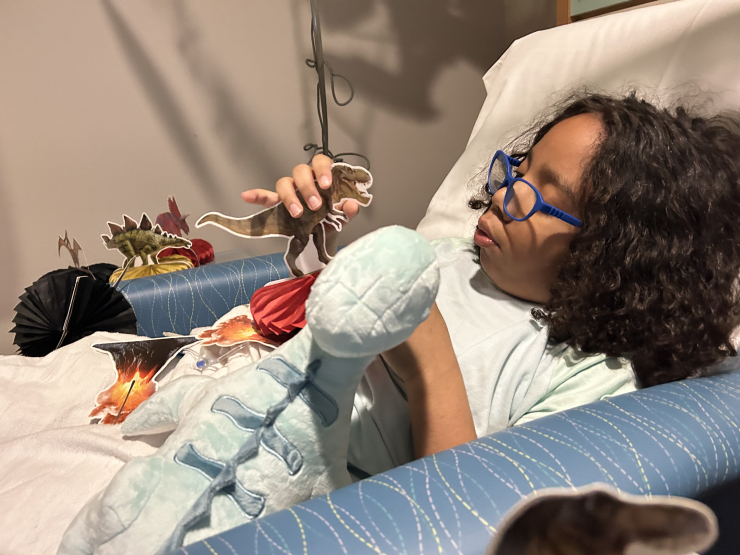
Running has always been part of Joey’s world. His family is full of runners—one of his siblings competes in collegiate track and field, and the rest of them run, race, and show up for events together.
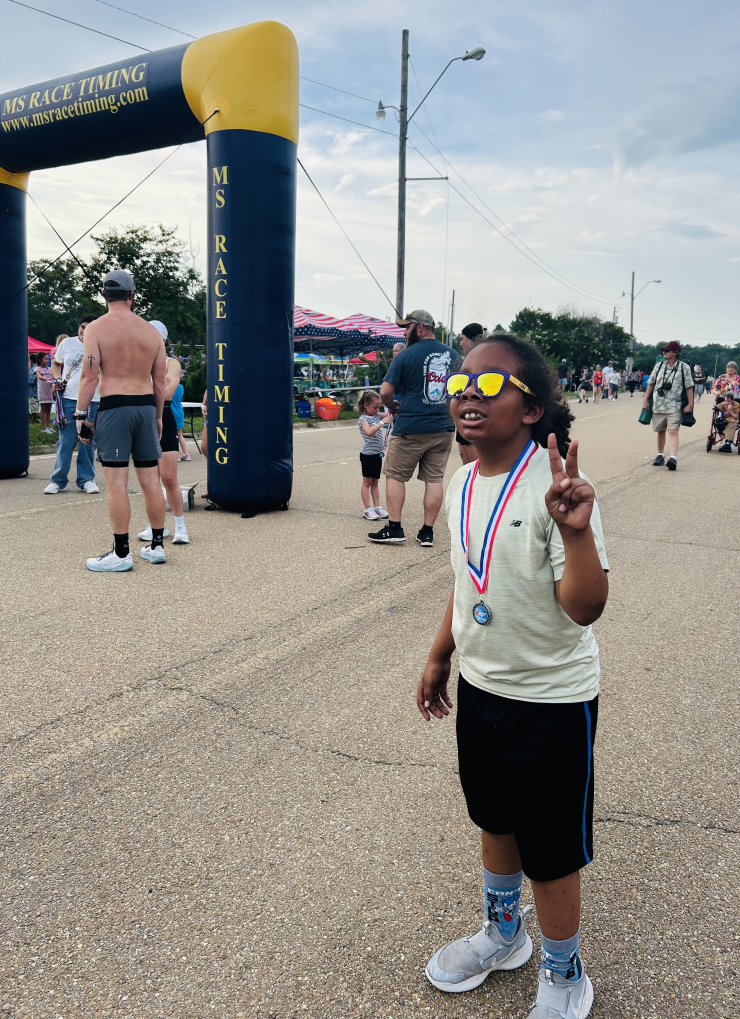
Joey grew up lining up for fun runs, cheering from the sidelines, and racing whenever he could, always eager to be part of the action.
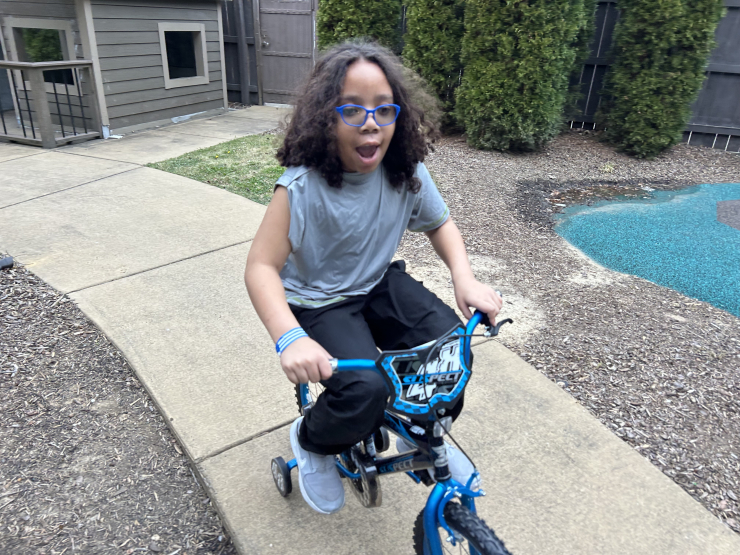
That change Alicia mentioned showed up clearly at a race Joey had always done.

The kids’ run starts downhill and finishes back up the hill. Joey flew down the hill like he always had. But on the way back up, chemo caught up with him. He slowed. He needed help. A police escort followed them as they made their way back, because Joey had become one of the last ones to finish.
That was new for him.
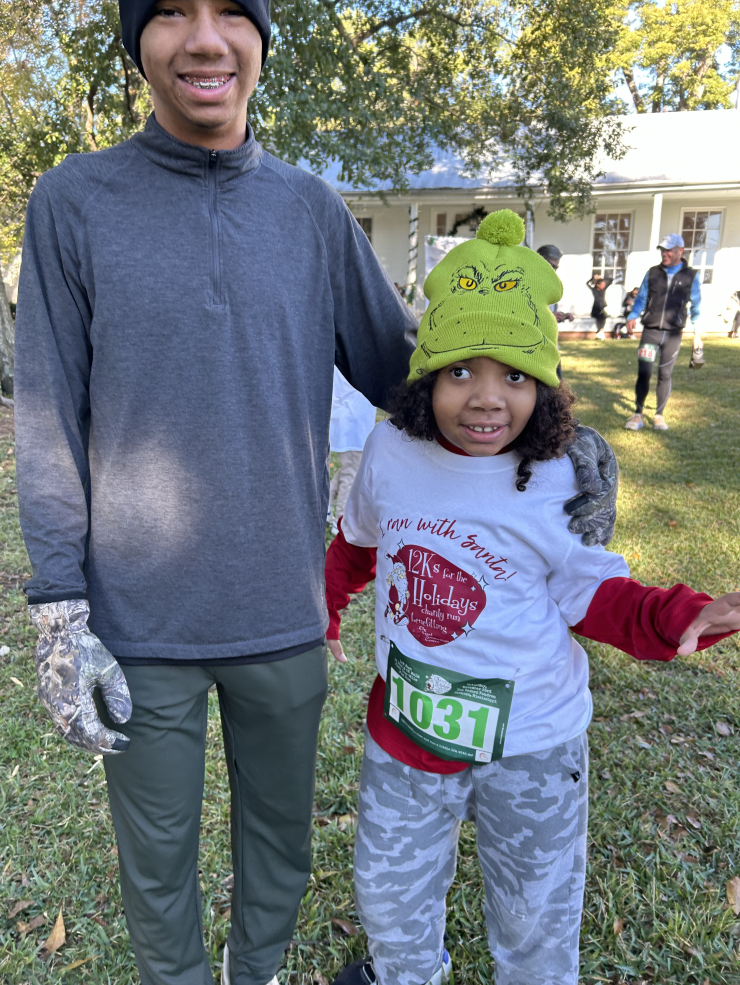
But he didn’t quit.

He refused to give up. He refused to be carried. Even as it took longer than expected, Joey kept moving forward, step by step, until he made it back.
For Alicia, moments like that highlighted a growing gray area. Joey can walk. He wants to walk. He insists, “I can walk,” even when offered a wheelchair. And often, he can—just not for as long as he used to.
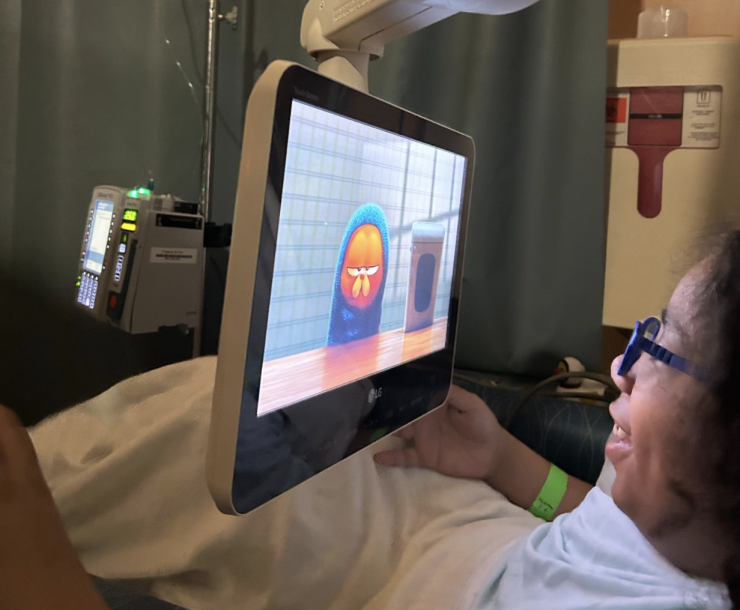
Joey is also a big kid—nearly 90 pounds—due to early puberty caused by the tumors. Traditional strollers and mobility options no longer worked, but full-time wheelchair use wasn’t the right fit either.
That’s the gap an adaptive mobility pushchair stroller can fill.
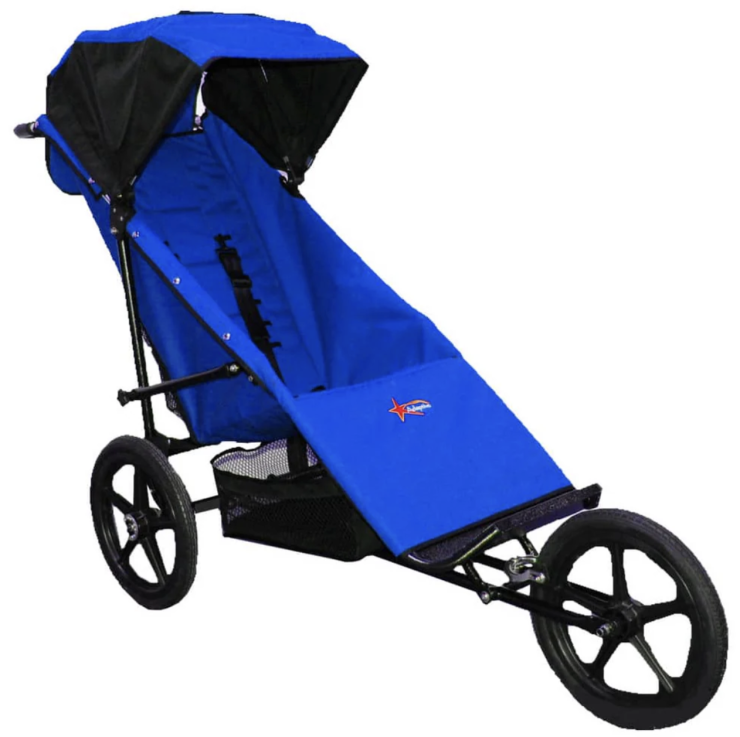
With the right stroller, Joey can still line up for races, join family outings, walk trails, and take the long way through the hospital when he wants to. And when his body needs a break, he can take one without missing out or putting himself at risk.
Through donor support, Chive Charities provided a $2,000 grant to help Joey’s family purchase an adaptive mobility pushchair stroller. This is huge for him, and it’s possible because of people like you.
For Joey, the stroller isn’t about slowing down. It’s about staying active in the life he loves.
Joey has never taken the shortcut just because it was there.
He follows the river.
And thanks to this community, he gets to keep going, winding his way toward whatever comes next. Join our donor family and help support hero kids like Joey. DONATE HERE.


 Silver, Gold and Green members receive the much-desired Green Ribbon T-Shirt. Give proudly. Wear proudly.