
Sometimes, it’s just a few inches—an easy step, a simple transfer, a door that opens without a second thought. And sometimes, it’s a barrier that keeps you from the things you love most.
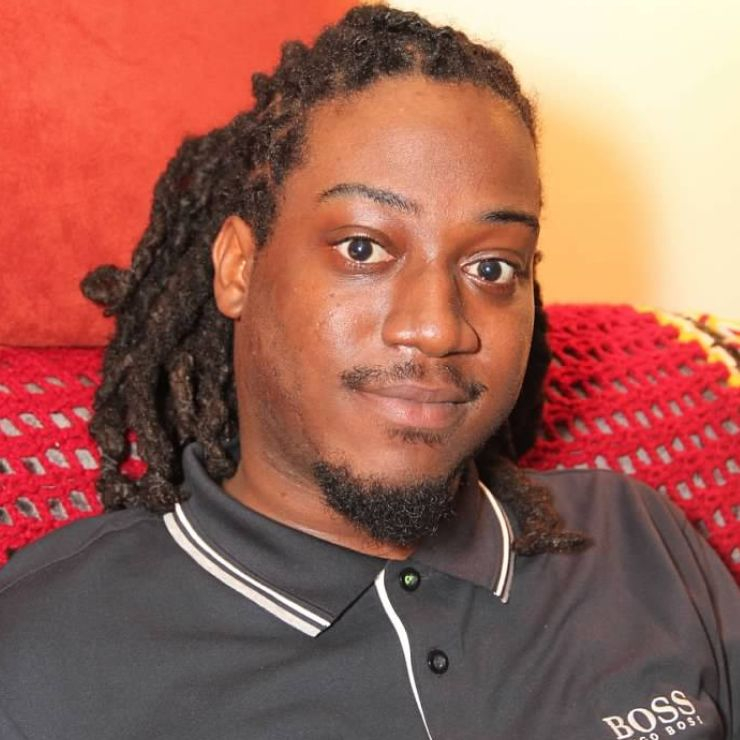
Freedom, for Dom, isn’t some big, abstract idea.
It’s the grocery store.
A football game.
A movie with his partner.
A family cookout on a warm day.
It’s being able to leave the house without having to think through every single detail first. Like how he’ll get there, how he’ll get back, what could go wrong, and what happens if it does.
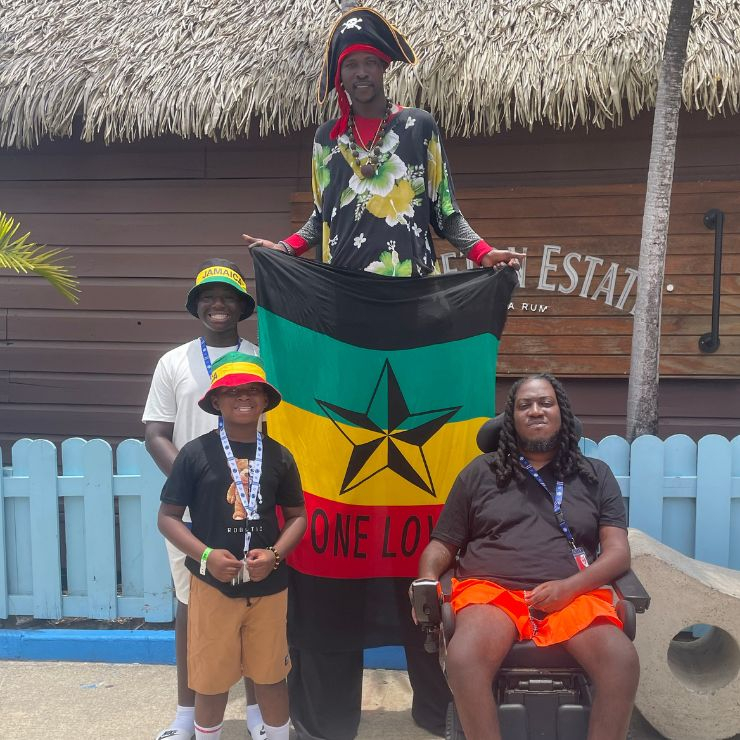
For a long time now, even the simplest plans have come with layers.
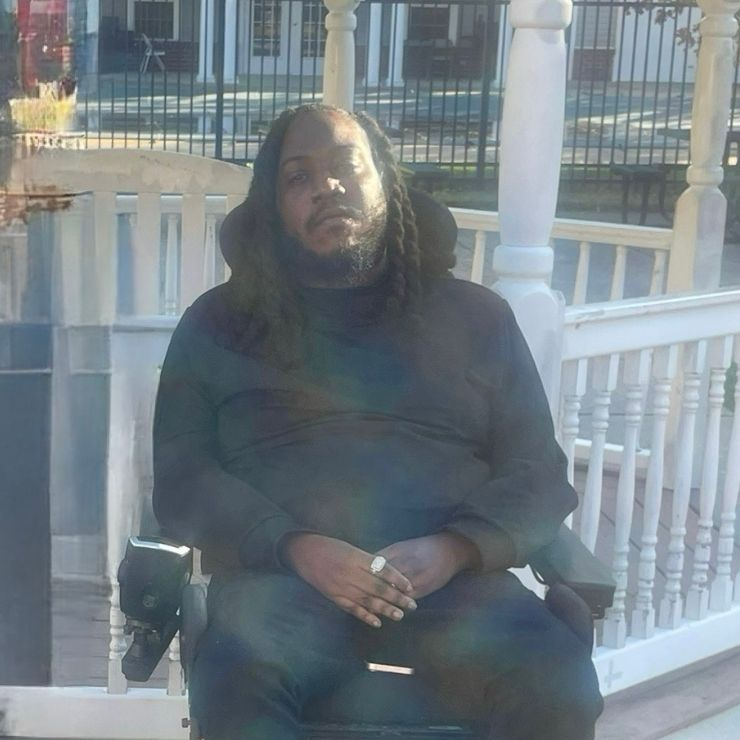
Dom lives in Prince George’s County, Maryland, just outside Washington, D.C. He uses a power wheelchair because of Limb-Girdle Muscular Dystrophy Type 2B, a condition that causes progressive muscle weakness, especially in the shoulders, hips, and legs.
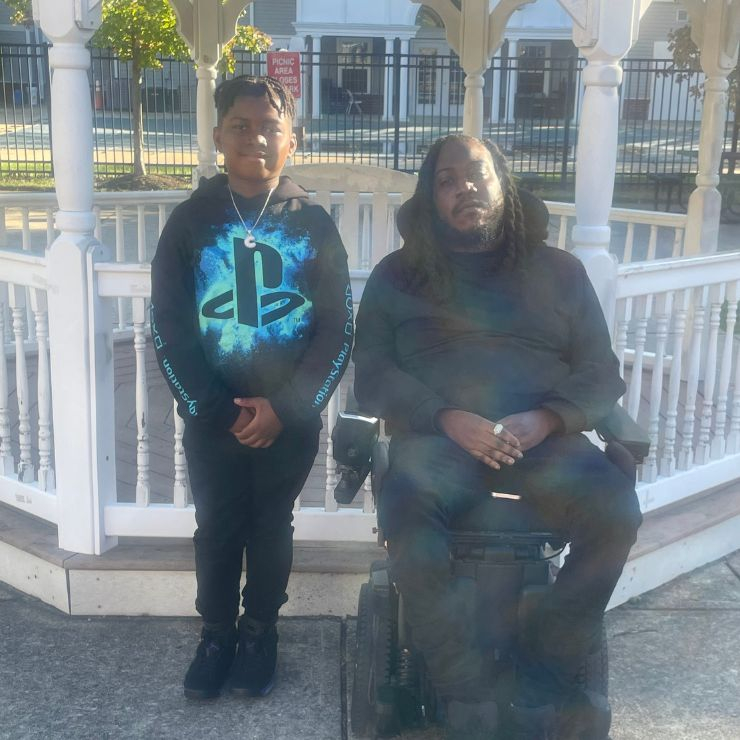
These days, he needs help with most daily tasks, including getting dressed, moving in and out of bed, and getting into the shower. There are still a few things he can do on his own, but as he puts it, those are “very minimal.”
What isn’t minimal is who he is.
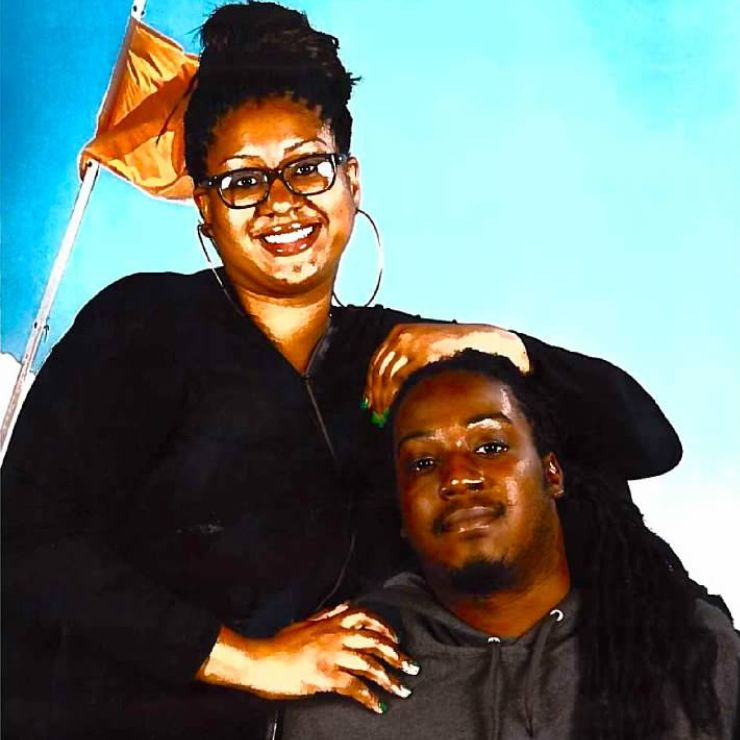
Dom is funny, easy to talk to, and quick with a story. He’s a diehard Washington sports fan, a PlayStation guy through and through, and someone who’s watched just about every movie and show out there. He games with his sons. He laughs easily. He pays attention to their needs. He shows up.
And that’s the thing—you get the sense pretty quickly that Dom’s world has gotten smaller in some ways, but he hasn’t.
He grew up in a big, tight-knit family in Maryland, the youngest in the house. His dad is one of nine, his mom one of six, which meant cousins everywhere and a whole lot of people looking out for each other. He was active and always moving, playing basketball, football, riding bikes, just being a kid.
Then, around 16, something started to change.
At first, it didn’t seem like anything major. A limp. Maybe a little weakness. The kind of thing you brush off and assume will go away. But it didn’t. Over time, it got harder to run. Then harder to move the way he used to. Doctors had ideas, but no clear answers.
For years, he lived in that in-between space of knowing something was wrong, but not knowing what.
He kept going anyway.
He worked landscaping jobs, showing up every day and doing what needed to be done. It wasn’t until he was 21 that specialists at the National Institutes of Health finally gave his symptoms a name: Limb-Girdle Muscular Dystrophy.
By then, a lot had already changed.
Around that same time, Dom became a dad.
His oldest son, Damari, was born during one of the hardest stretches of his life. Dom had been in and out of the hospital, trying to figure out what was happening to his body. He was officially diagnosed just a few months after Damari was born.
It was a lot, all at once.
But when Dom talks about that time, what stands out isn’t just how hard it was. It’s what Damari meant to him in the middle of it.
“He was that blessing,” Dom said.
And from there, he kept finding ways to be present.
Even as things got harder physically, he stayed involved. He coached youth football, following the lead of an uncle who had done the same. He showed up for practices. For games. For his son.
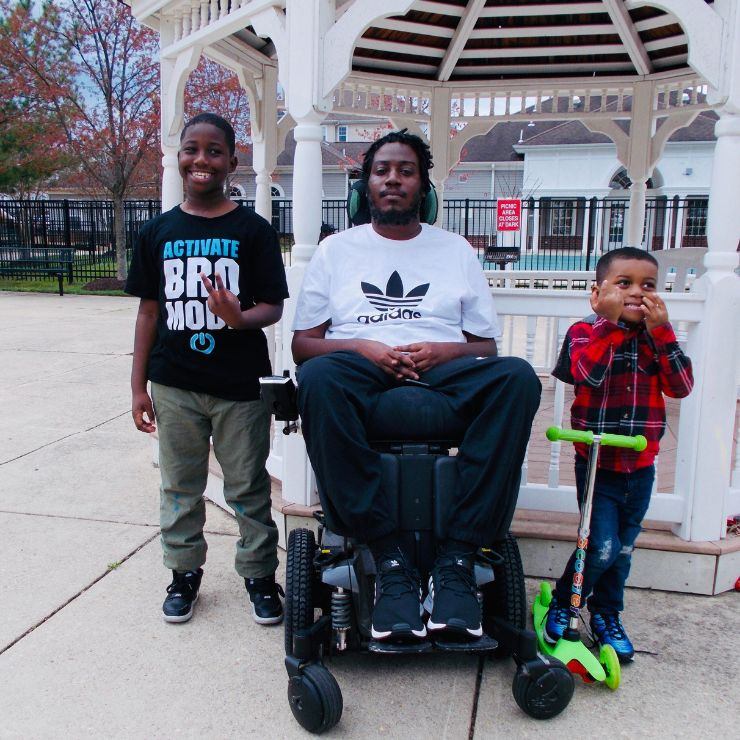
That matters to him. Being there matters.
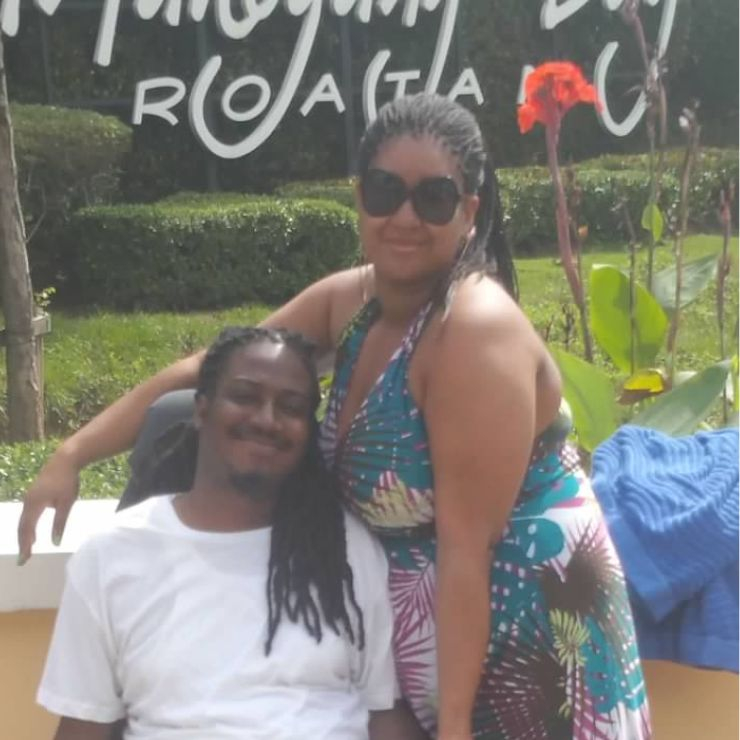
So does the life he’s built with his partner, Tawana.
They’ve been together for more than a decade, and when Dom talks about her, there’s no hesitation.
“She walked in, stepped in, and accepted me for who I am with open arms,” he said.
He calls her an angel, and he means it.
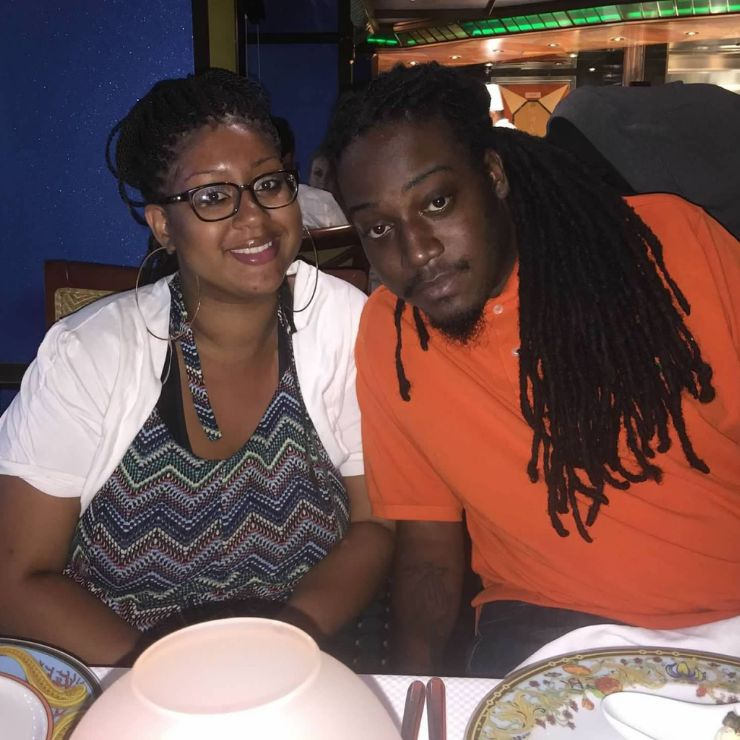
Tawana is his teammate, his caregiver, and the steady center of their home. Together, they’re raising their youngest son, Cameron, and building a life that, despite everything, is full of love, humor, and connection. Dom talks just as highly about his parents, his brother, and his extended family, all of whom play a role in helping him navigate daily life.
He doesn’t take any of it for granted.
But even with that kind of support, there are still things that are just…hard.
Transportation has been one of the biggest.
Without a wheelchair-accessible van of his own, getting out into the world hasn’t been simple. Dom has rented accessible vans when he could, just to have a few days where things felt easier, but it’s expensive, and not something he can rely on regularly.
Rideshare options haven’t always worked either.
One time, he took an accessible ride to one of his son’s football games. Getting there wasn’t the problem. Getting home was. He couldn’t find a return ride, no matter how long he tried. Eventually, he had to leave his power wheelchair at a police station, ride home another way, and come back the next day to get it.
That kind of thing sticks with you.
Even public transit options come with their own hurdles. Some require long wait times or strict return windows that don’t line up with real life. A one-hour game can turn into a three-hour outing just because of the rules.
It adds up. Mentally, physically, emotionally.
So when Dom got the call from Chive Charities—that thanks to generous donors, he’d be receiving a wheelchair-accessible van for a total impact of $55,000—he cried.
He thought it was a long shot.
When the email came through, it hit him all at once, and his sons were right there with him.
“They were very excited,” he said. “Jumping up and down.”

And then his son Cameron asked the question that says everything:
“So now you can come to the away games instead of just going to the home games?”
That’s it. That’s what this van means.
Yes, it’s transportation. It’s getting to the grocery store without all the extra steps. It’s date nights. Movies. Family visits. Cookouts. Football games without worrying about how you’re getting home.
But it’s also something bigger than that.
It’s being able to say yes more often.
For Dom, that matters in a lot of ways. Not just as a dad or a partner, but as someone who’s used his own experience to help others. Through his work with Disability Rights Maryland, he’s advocated for people with disabilities, helped push for better accessibility, and made sure people understand what’s fair and what’s not. He’s even been recognized with an award for that work.
This van will help with that, too.
It will make it easier for him to get to meetings, stay involved, and keep doing what he’s already been doing—showing up for others the same way people have shown up for him.
Because that’s who Dom is.
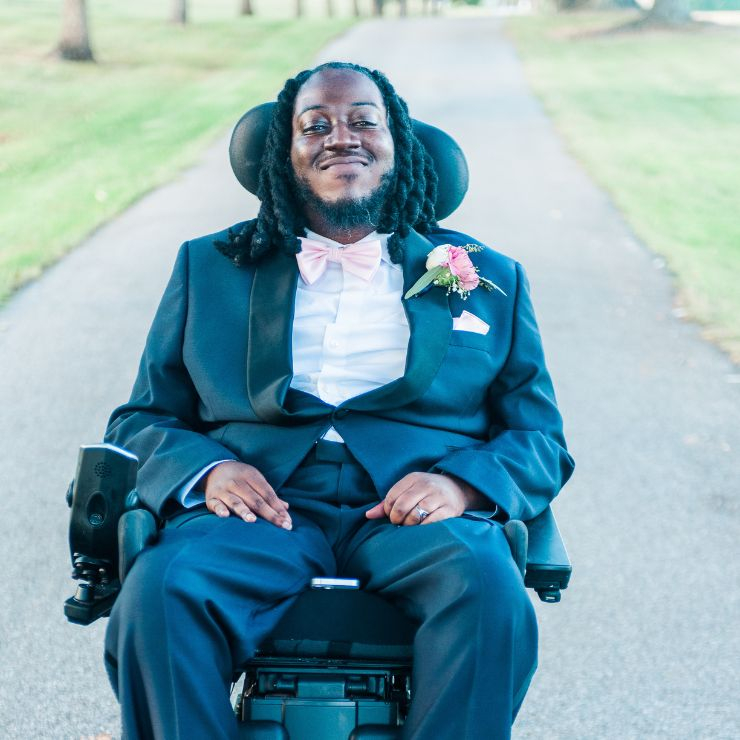
He’s someone who’s faced a lot of change, a lot of loss of independence, and a lot of daily challenges and still chooses to stay positive. Still chooses to stay connected. Still finds ways to be present in his own life and in the lives of the people around him.
And now, thanks to Chive Charities donors, the distance between here and there is about to get a whole lot smaller.
Here, there’s a father who just wants to show up for his sons and his partner in every way he can. Now, he can do a little more of that.
Out there, there’s another Chive Charities recipient still waiting for their own answered prayer.
The distance between here and there isn’t measured in miles.
It’s measured in the kindness of people like you. People willing to show up for someone they may never meet, and change a life because of it. “Thank you for what you do for our community,” Dom said. “Y’all are greatly needed and greatly appreciated.”
Become part of our donor family today and DONATE HERE.
The Breakdown
Q: What difference does a wheelchair-accessible van make?
A: It provides independence, reliable transportation, and the ability to participate in everyday life without complex planning or barriers.
Q: Who benefits from accessible transportation support?
A: Individuals with mobility challenges, including those with conditions like muscular dystrophy, who rely on specialized vehicles to travel safely.
Q: How can people help families like Dom’s?
A: By supporting nonprofits like Chive Charities, donating, or spreading awareness to fund life-changing resources like accessible vehicles.


 Silver, Gold and Green members receive the much-desired Green Ribbon T-Shirt. Give proudly. Wear proudly.